Abuses, Unanswered Questions, and US-Ecuador Security Cooperation
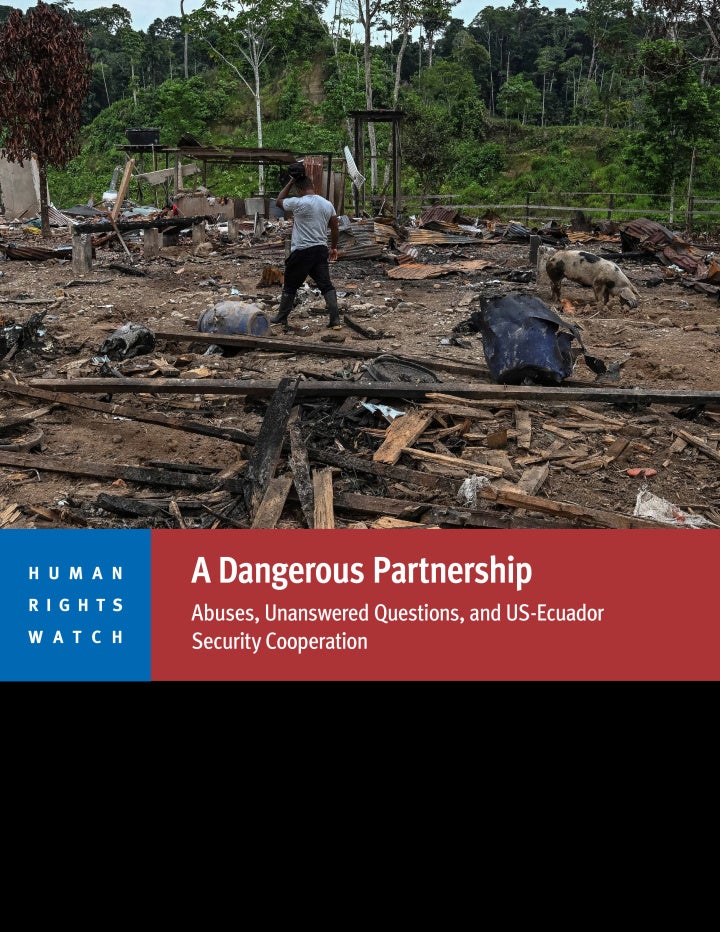
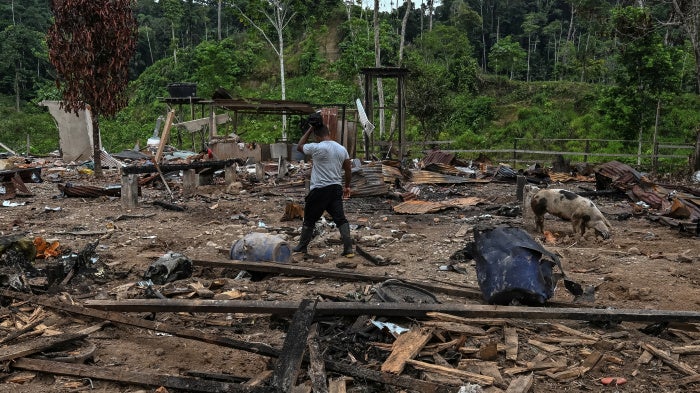
The 94-page report, "A Dangerous Partnership: Abuses, Unanswered Questions, and US-Ecuador Security Cooperation," documents serious human rights violations in a rural community on the Colombia-Ecuador border, as well as attacks on and the disappearance of fishermen at sea near the Galápagos Islands. Each incident either clearly implicates the US-Ecuador security partnership or surfaces questions about responsibility. Ecuadorian forces tortured and arbitrarily detained four farm workers, and later burned and struck a dairy farm, during what the United States called a “partnered operation.” And drones of unknown origin attacked two fishing vessels, injuring several crew members. A third vessel remains missing.
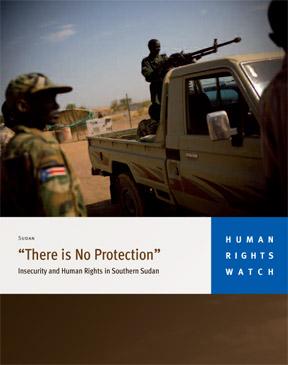
This 44-page report documents the most pressing human rights challenges facing the SPLM-led Government of Southern Sudan. The problems include an inability to protect civilians effectively from armed attacks and violence, a failure to address abuses by security forces, and a weak justice system.
Abuse and Exploitation of Child Domestic Workers in Indonesia
This report documents how hundreds of thousands of girls in Indonesia, some as young as 11, are employed as domestic workers in other people’s households, performing tasks such as cooking, cleaning, laundry, and child care. Most girls interviewed for the report worked 14 to 18 hours a day, seven days a week, with no day off. Almost all are grossly underpaid, and some get no salary at all.
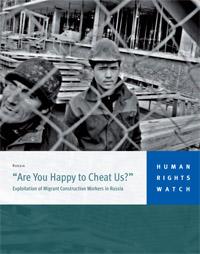
Exploitation of Migrant Construction Workers in Russia
This 130-page report documents widespread withholding of wages, failure to provide required contracts, and unsafe working conditions by employers at construction sites across Russia.
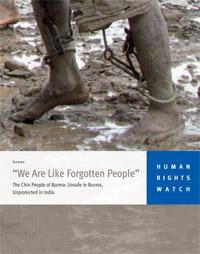
The Chin People of Burma: Unsafe in Burma, Unprotected in India
In this 93-page report, Human Rights Watch documents a wide range of human rights abuses carried out by the Burmese army and government officials. The abuses include forced labor, arbitrary arrests and detention, torture, religious repression and other restrictions on fundamental freedoms.
The briefing paper details some of the glaring deficiencies in current US labor law that significantly impair the right of workers to freely choose whether to form a union. It recommends that the US Congress pass the Employee Free Choice Act to help remedy these shortcomings and bring US law closer to international standards.
Humanitarian Law Violations and Civilian Victims in the Conflict over South Ossetia
This 200-page report details indiscriminate and disproportionate attacks by both Georgian and Russian forces, and the South Ossetian forces' campaign of deliberate and systematic destruction of certain ethnic Georgian villages in South Ossetia. It also describes Russia's failure to ensure public order and safety in areas of Georgia that were under its effective control.
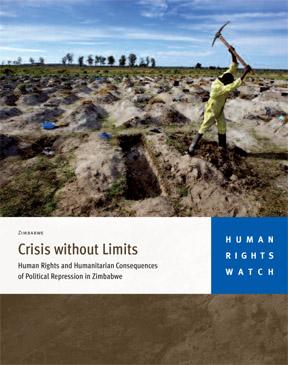
Human Rights and Humanitarian Consequences of Political Repression in Zimbabwe
This 33-page report details the Zimbabwean government's responsibility for the country's humanitarian crisis. A cholera epidemic has left over 2,000 Zimbabweans dead and another 39,000 ill. Over 5 million Zimbabweans face severe food shortages and are dependent on international aid.
Rights Abuses of Ethnic Khmer in Vietnam’s Mekong Delta
This report documents ongoing violations of the rights of the Khmer Krom in southern Vietnam and also abuses in Cambodia against Khmer Krom who have fled there for refuge. Wary about possible Khmer Krom nationalist aspirations, Vietnam has suppressed peaceful expressions of dissent and banned Khmer Krom human rights publications.
The 19th annual World Report summarizes human rights conditions in more than 90 countries and territories worldwide. It reflects extensive investigative work undertaken in 2008 by Human Rights Watch staff, usually in close partnership with human rights activists in the country in question.
This 42-page report documents how Iranian authorities use security laws, press laws, and other legislation to arrest and prosecute Iranian Kurds solely for trying to exercise their right to freedom of expression and association. The use of these laws to suppress basic rights, while not new, has greatly intensified since President Mahmoud Ahmadinejad came to power in August 2005.
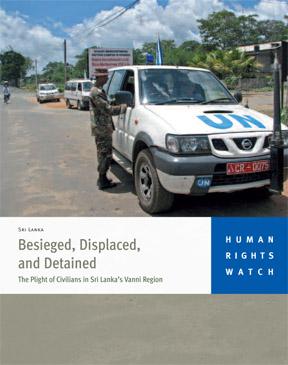
The Plight of Civilians in Sri Lanka’s Vanni Region
This 49-page report documents the Sri Lankan government's responsibility for the plight of the 230,000 to 300,000 displaced persons trapped in the Vanni conflict zone. They face severe shortages of food and other essentials because of government restrictions on humanitarian assistance.
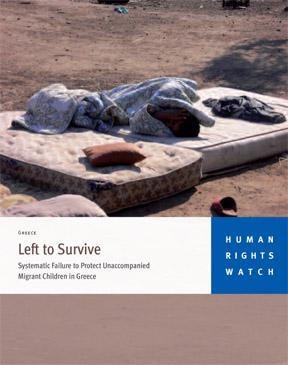
Systematic Failure to Protect Unaccompanied Migrant Children in Greece
Some 1,000 unaccompanied migrant children who have entered Greece in 2008 without parents or caregivers struggle to survive without any state assistance, Human Rights Watch said in a new report issued today.
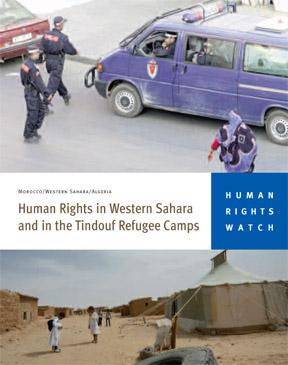
This 216-page report focuses on the present-day situation rather than on past abuses. Human Rights Watch documents how Morocco uses a combination of repressive laws, police violence, and unfair trials to punish Sahrawis who advocate peacefully in favor of independence or full self-determination for the disputed Western Sahara.