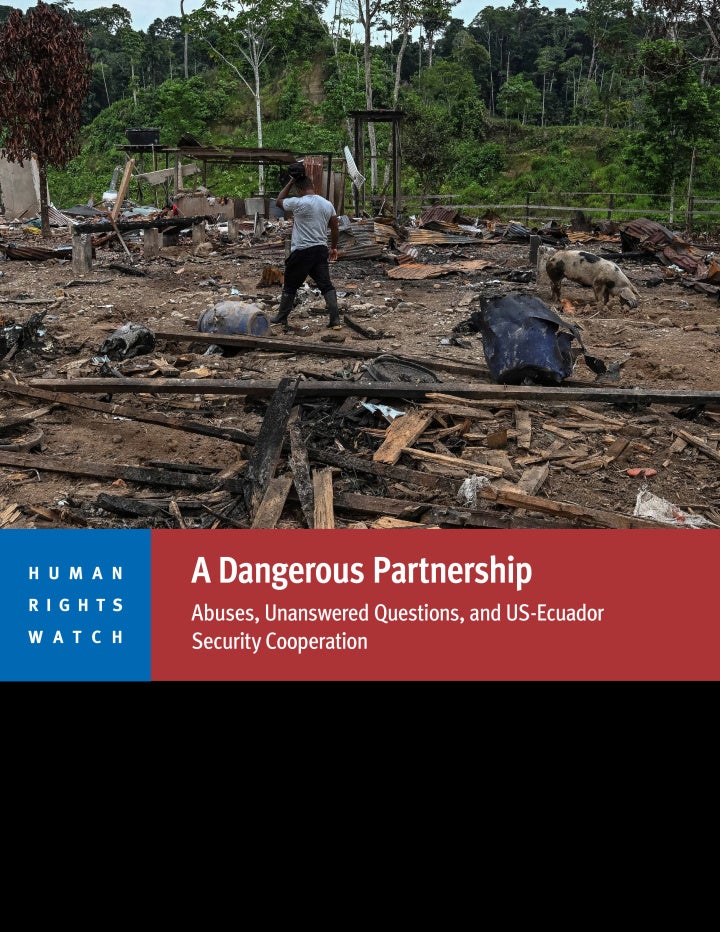
Abuses, Unanswered Questions, and US-Ecuador Security Cooperation
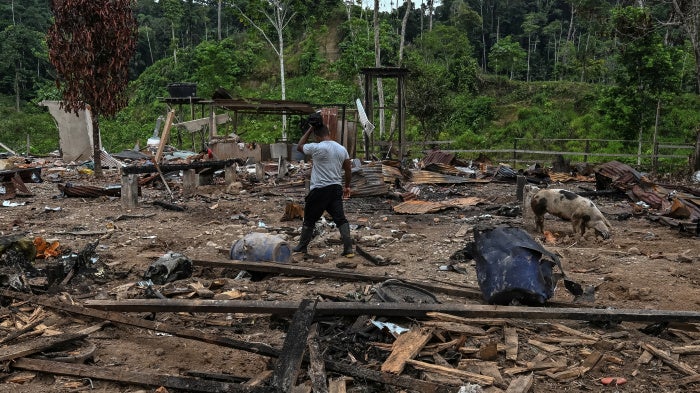
The 94-page report, "A Dangerous Partnership: Abuses, Unanswered Questions, and US-Ecuador Security Cooperation," documents serious human rights violations in a rural community on the Colombia-Ecuador border, as well as attacks on and the disappearance of fishermen at sea near the Galápagos Islands. Each incident either clearly implicates the US-Ecuador security partnership or surfaces questions about responsibility. Ecuadorian forces tortured and arbitrarily detained four farm workers, and later burned and struck a dairy farm, during what the United States called a “partnered operation.” And drones of unknown origin attacked two fishing vessels, injuring several crew members. A third vessel remains missing.
Evidence of Senior Army Officers’ Responsibility for False Positive Killings in Colombia
This 95-page report presents evidence strongly suggesting that numerous generals and colonels knew or should have known about false positive killings, and may have ordered or otherwise actively furthered them. Prosecutors are investigating at least 3,000 of these cases, in which army troops under pressure to boost body counts in their war against armed guerrilla groups killed civilians and reported them as combat fatalities. Hundreds of lower-ranking soldiers have been convicted, but just a handful of colonels and no generals.
Reprisals against Critics of World Bank Group Projects
This report details how governments and powerful companies have threatened, intimidated, and misused criminal laws against outspoken community members who stand to be displaced or otherwise allegedly harmed by projects financed by the World Bank and its private sector lending arm, the International Finance Corporation (IFC). The World Bank and IFC have failed to take adequate steps to help create a safe environment in which people can express concern or criticism about projects funded by the Bank Group without risk of reprisal, Human Rights Watch found.
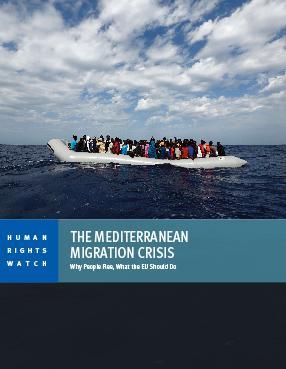
The 33-page report documents the human rights abuses driving people to make the dangerous sea crossing and the shortcomings of EU migration and asylum policies. The report is based on over 150 interviews in May with recently-arrived migrants and asylum seekers in Italy – Lampedusa, Catania, and Milan – and Greece – the islands of Lesbos, Chios, Samos, Leros, and Kos. The conclusions are also based on extensive Human Rights Watch research in Syria, Eritrea, Afghanistan, and Somalia – the home countries of many of those arriving by sea.
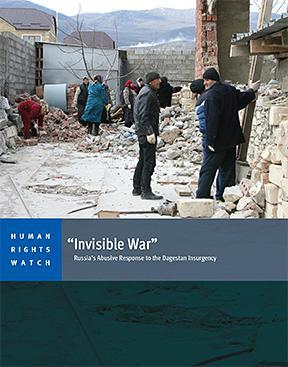
Russia’s Abusive Response to the Dagestan Insurgency
This 97-page report and an accompanying video document human rights violations in counterinsurgency efforts as well as crimes by insurgents in Dagestan from 2012 through 2014. The abuses are set against a background in which authorities treat adherents of Salafism, a fundamentalist interpretation of Sunni Islam that is increasingly popular in Dagestan, as criminal suspects despite the absence of any grounds to suspect them of a specific offense.
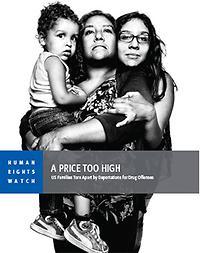
US Families Torn Apart by Deportations for Drug Offenses
This report documents how the US regularly places legal residents and other immigrants with strong ties to US families into deportation proceedings for drug offenses. Often, those offenses are decades old or so minor they resulted in little or no prison time.
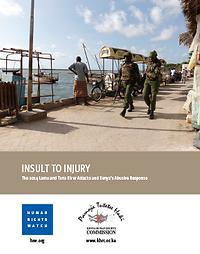
The 2014 Lamu and Tana River Attacks and Kenya’s Abusive Response
This report details how during five weeks between mid-June through July 2014, armed gunmen who in most cases claimed to be part of the Somalia-based armed Islamist group Al-Shabaab, attacked a passenger bus and at least eight villages in the Kenyan coastal counties of Lamu and Tana River. The attackers killed 87 people including four security officers, and destroyed approximately 30 buildings and 50 vehicles.
Child Labor and Corporate Responsibility in Ghana’s Artisanal Gold Mines
This 82-page report documents the use of child labor in Ghana’s artisanal, or unlicensed, mines, where most mining takes place. It is estimated that thousands of children work in hazardous conditions in violation of Ghanaian and international law. They pull the gold ore out of shafts, carry and crush loads of ore, and process it with toxic mercury.
This 134-page report is based on more than a hundred interviews conducted across the country, most of them with married girls, some as young as age 10. It documents the factors driving child marriage in Bangladesh – including poverty, natural disasters, lack of access to education, social pressure, harassment, and dowry.
Retaliation against Sexual Assault Survivors in the US Military
This 113-page report finds that both male and female military personnel who report sexual assault are 12 times as likely to experience some form of retaliation as to see their attacker convicted of a sex offense.
This 145-page report is based on Human Rights Watch analysis of hundreds of newly published court verdicts from across the country and interviews with 48 recent detainees, family members, lawyers, and former officials. Human Rights Watch found that police torture and ill-treatment of suspects in pretrial detention in China remains a serious problem.
Use of Force against Inmates with Mental Disabilities in US Jails and Prisons
This 127-page report details incidents in which correctional staff have deluged prisoners with painful chemical sprays, shocked them with powerful electric stun weapons, and strapped them for days in restraining chairs or beds. Staff have broken prisoners’ jaws, noses, ribs; left them with lacerations requiring stitches, second-degree burns, deep bruises, and damaged internal organs.
Saudi Abuses against Migrants during Mass Expulsions
This 36-page report draws on interviews with 60 workers deported to Yemen and Somalia who experienced serious abuses during the expulsion campaign. They described beatings and detention in poor conditions before they were deported.
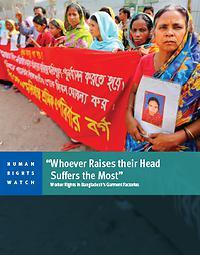
This 78-page report is based on interviews with more than 160 workers from 44 factories, most of them making garments for retail companies in North America, Europe, and Australia.
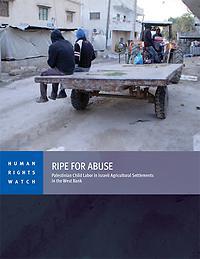
Palestinian Child Labor in Israeli Agricultural Settlements in the West Bank
This 74-page report documents that children as young as 11 work on some settlement farms, often in high temperatures. The children carry heavy loads, are exposed to hazardous pesticides, and in some cases have to pay themselves for medical treatment for work-related injuries or illness.
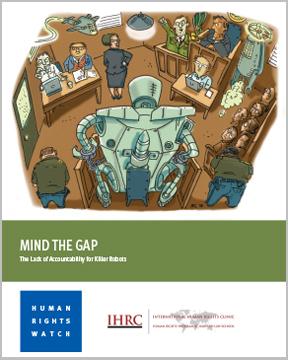
This 38-page report details significant hurdles to assigning personal accountability for the actions of fully autonomous weapons under both criminal and civil law. It also elaborates on the consequences of failing to assign legal responsibility. The report is jointly published by Human Rights Watch and Harvard Law School’s International Human Rights Clinic.