Impact

By investigating and exposing human rights abuses, we work to create a world where everyone is treated fairly and equitably, no matter their race, religion, or beliefs. We call for action so that people who disagree with their government can speak their opinions freely, so that children are protected, and refugees cared for. All of us, regardless of who we are, who we love, or the color of our skin, should be able to enjoy fully our human rights.

BROWSE ALL IMPACT ›

Change is sometimes immediate, sometimes incremental. We work on issues for years and know from experience how to transform deep-rooted problems. Here are examples of some of the recent impact we have made, together with our partners, in advancing human rights around the world.

How do we bring about change?

Investigate
Our researchers investigate human rights abuses, first by speaking with victims or witnesses. We corroborate their stories using a variety of sources, including government records, weapons’ fragments, satellite imagery, and the statements of accused perpetrators – be they members of governments, armed groups, or companies. We often do this work together with partner activists.

Expose
We share this information widely, in multiple languages, to help shape public debate. Our reports, videos, and social media posts show up hundreds of times daily in news media around the world, bringing both global and local attention to our rigorously fact-checked findings.

Change
Often in coalition with local groups, we bring our findings to officials who have the power to change things. For every issue we work on, we make specific, concrete policy recommendations that will bring people justice, prevent future abuses, and protect human rights.
Our work has been instrumental in some foundational victories for human rights, including our work on banning landmines worldwide, for which we and our partners received the 1997 Nobel Peace Prize. Below are some examples of our historic impact.

All impact

  • April 4, 2023
    This week, Trinidad and Tobago’s Prime Minister Keith Rowley reportedly made a commitment that scores of Trinidadians detained in unconscionable conditions in northeast Syria and Iraq have waited four years to hear: the Government will bring them home. The Prime Minister is making the right choice morally, legally, and strategically.
    A boy drags a cart
  • April 1, 2023
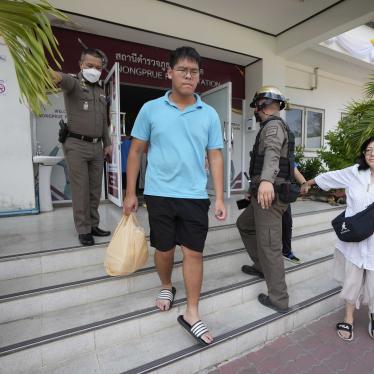
    The government of Thailand should ensure that 63 recently detained Christian Chinese asylum seekers are not returned to China, where they face persecution, torture, and other serious harm.
    Members of the Shenzhen Holy Reformed Church, also known as the Mayflower Church, leave from the Nongprue police station on their way to Pattaya Provincial Court in Pattaya, Thailand, March 31, 2023.
  • March 2, 2023
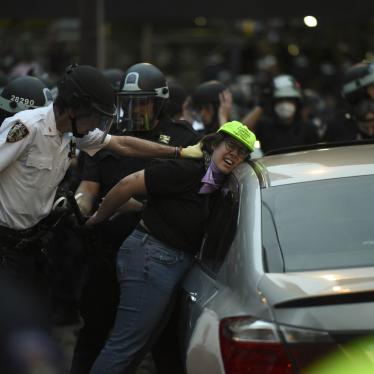
    In an agreement made public yesterday, New York City will pay up to $4-6 million to partially settle a legal case brought by hundreds of people trapped, beaten, and wrongfully arrested by the New York Police Department (NYPD) in the summer of 2020.
    Police push a woman in a green hat against a car and handcuff her
  • February 28, 2023
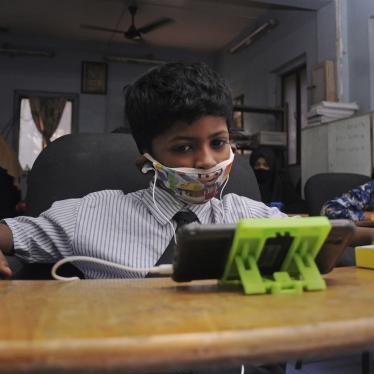
    This week, the Indian government announced a third-party security audit of Diksha, the educational app it owns and uses to provide online education to students in grades 1 to 12. The government also committed to better protect the data privacy of children and teachers using its app.
    Children studies online using borrowed mobile phones in Mumbai, India.
  • February 14, 2023
    United Nations member states agreed to fully fund UN human rights mechanisms that China, Russia, and their allies had sought to defund in the 2023 budget. This should set a precedent for UN human rights funding in the future.
    Dai Bing (on screen), China's deputy permanent representative to the United Nations, speaks during the opening of the main session of the Fifth Committee of the 77th UN General Assembly.
  • February 14, 2023
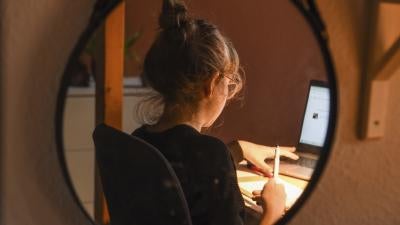
    Several governments and companies have taken steps, or announced future steps, to protect millions of children in their online classrooms. These moves come after Human Rights Watch uncovered children’s rights violations worldwide by governments that authorized unsafe online learning products during the Covid-19 pandemic.
    A girl studies online at home during Covid-19 school closures in Berlin.
  • January 18, 2023
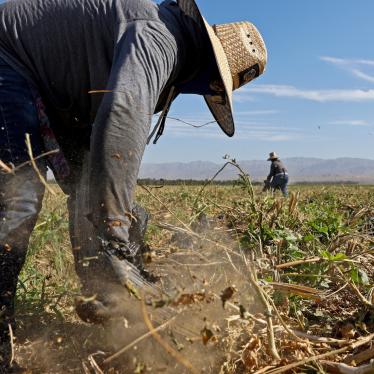
    In a major victory for workers, the United States Department of Homeland Security (DHS) announced new guidance last week that allows migrant and immigrant workers who experience or witness workplace labor or civil rights violations to receive temporary protection against deportation and access to work authorization.
    Farm workers in an okra field in California.
  • November 21, 2022
    After three years of negotiations, 82 countries have adopted a political declaration that seeks to better protect civilians from the use of explosive weapons in populated areas. The international pledge is the first to formally address the long-standing practice of using aircraft bombs, artillery, rockets, and missiles in villages, towns, and cities.
    Ireland’s Minister for Foreign Affairs Simon Coveney speaking at the Explosive Weapons in Populated Areas Conference.