Impact

By investigating and exposing human rights abuses, we work to create a world where everyone is treated fairly and equitably, no matter their race, religion, or beliefs. We call for action so that people who disagree with their government can speak their opinions freely, so that children are protected, and refugees cared for. All of us, regardless of who we are, who we love, or the color of our skin, should be able to enjoy fully our human rights.

BROWSE ALL IMPACT ›

Change is sometimes immediate, sometimes incremental. We work on issues for years and know from experience how to transform deep-rooted problems. Here are examples of some of the recent impact we have made, together with our partners, in advancing human rights around the world.

How do we bring about change?

Investigate
Our researchers investigate human rights abuses, first by speaking with victims or witnesses. We corroborate their stories using a variety of sources, including government records, weapons’ fragments, satellite imagery, and the statements of accused perpetrators – be they members of governments, armed groups, or companies. We often do this work together with partner activists.

Expose
We share this information widely, in multiple languages, to help shape public debate. Our reports, videos, and social media posts show up hundreds of times daily in news media around the world, bringing both global and local attention to our rigorously fact-checked findings.

Change
Often in coalition with local groups, we bring our findings to officials who have the power to change things. For every issue we work on, we make specific, concrete policy recommendations that will bring people justice, prevent future abuses, and protect human rights.
Our work has been instrumental in some foundational victories for human rights, including our work on banning landmines worldwide, for which we and our partners received the 1997 Nobel Peace Prize. Below are some examples of our historic impact.

All impact

  • February 25, 2025
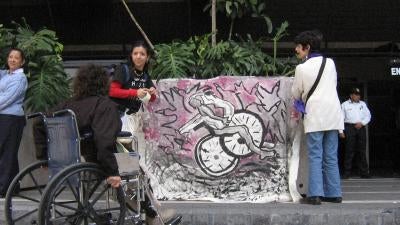
    People with disabilities have seen two major policy wins in the Americas this fall, one in Mexico City and the other in Costa Rica. Both victories help guarantee equal legal recognition for all people.
    Marite Fernández and disability rights adovocates demonstrate before the Mexican Senate demanding the right to full legal capacity, Mexico City, Mexico, 2007.
  • January 21, 2025
    The United States Health and Human Services Department (HHS) published a landmark report on intersex health equity last week, calling for an end to medically unnecessary non-consensual surgeries on children born with intersex variations.
    People rally to end intersex surgeries in New York City, October 27, 2018. 
  • January 16, 2025
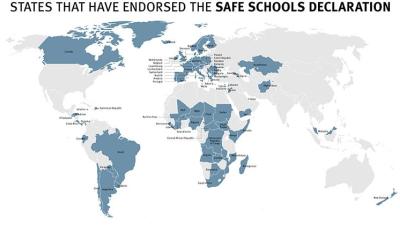
    Today the United States endorsed the Safe Schools Declaration, a political commitment to protect education during war. By signing, the US joins 120 countries working together to protect students, teachers, and schools from violent attacks.
     A school guard walks in the corridor of a school which was heavily damaged after a Russian airstrike in Mohrytsia, Ukraine, August 14, 2024.
  • January 8, 2025
    The late US President Jimmy Carter’s human rights legacy includes his role long after leaving office in 1981. His partnership with Human Rights Watch and many other nongovernmental organizations helped achieve important advances in international law, including treaties to hold war criminals to account, to prohibit landmines and cluster munitions, and to ban the use of children as soldiers.
    Former US President Jimmy Carter.
  • December 9, 2024
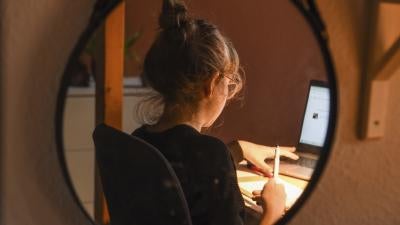
    People creating adult content in Colombian webcam studios are subject to a wide range of labor rights abuses and sexual exploitation. Researcher Erin Kilbride speaks about the surprising findings in the new report.
    Webcam models seated in cubicles in a studio
  • December 2, 2024
    Volkswagen should take further steps to insulate itself from state-imposed forced labor by ensuring its Chinese joint ventures and suppliers adopt and enforce the same human rights and environmental standards as the company’s German operations.
    202401asia_china_xinjiang_saicvolkswagen
  • November 28, 2024
    The vote by the Congress of the State of Mexico on November 25, 2024, to decriminalize abortion in all cases during the first 12 weeks of pregnancy is a significant step forward for reproductive rights in the country’s most populous state.
    Green handkerchiefs bearing the slogan "Abortion for All of Mexico" in front of the State of Mexico Congress on September 19, 2024, in Toluca, Mexico.
  • October 10, 2024
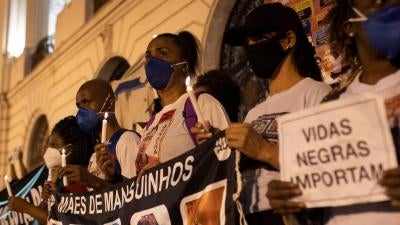
    A new report by a group of UN experts shows the dramatic impact of systemic racism in law enforcement in Brazil and lays out recommendations for public security policies that abide by the law, uphold rights, and protect all.
    Activists protest in Sao Paulo against racism, police violence, and against a police operation that took place in Jacarezinho in Rio de Janeiro, Brazil, May 13, 2021. The placards read "Stop killing us" and "They agreed to kill us, and we agreed not to die".