Dmytro was at his grandma’s home in a village in Ukraine’s Zaporizhzhia region on February 24, 2022—the day that Russia launched its full-scale invasion. He’d come to the village with his mom, dad, and little sister on one of their regular visits to help grandma with household chores. Russian forces entered the village that morning. Within a few weeks, Russian checkpoints and roadblocks—and the soldiers who manned them—had completely sealed the village. With no movement in or out of the village, its only shop quickly ran out of food. Dmytro, 14 then, and his family were lucky to have a few cows, goats, and chickens that kept them from going hungry.
Ukraine: Russian-Run Schools Violate Children’s Rights
Systematic Effort in Occupied Territory to Erase Ukrainian Identity
Russian soldiers were everywhere, often drunk, harassing adults and children alike, Dmytro said. During the day, soldiers stopped people in the streets. At night, soldiers raided homes—interrogating villagers, demanding to know whether they had anything against the occupation, tearing everything apart, searching for evidence of collaboration with Ukrainian authorities.
Soldiers raided Dmytro’s family home at least two or three times a month, pushing Dmytro’s parents to discuss their political views, their connections in government-controlled areas, and family or friends who served in the Ukrainian military. They were rough with Dmytro’s father, whose expired Ukrainian passport marked him as a former resident of the Lviv region, where anti-Russian sentiment was particularly high. Soldiers dragged him out of the house; when he returned, he was bruised from the beatings.
As time went on, the soldiers increasingly demanded to know why Dmytro’s parents had not obtained Russian passports and why the kids were not attending the occupying administration’s school.
Dmytro was studying in a Ukrainian school online. But it was a closely guarded secret. He had his homework sent to his mother’s phone. After completing the assignments by hand, he sent photos of them to his Ukrainian teachers, hid the phone under his grandma’s toilet seat, and destroyed the hard copies of the assignments. Just thinking about the soldiers finding those papers terrified him and his parents.
While Dmytro’s parents did not want to take Russian citizenship, or for their children to attend “Russian” school and be exposed to anti-Ukrainian propaganda, under relentless pressure, they applied for Russian passports in mid-2024. With soldiers and the occupying administration explicitly threatening to send Dmytro and Halya to a Russian orphanage unless they started school in September, it was impossible to avoid the occupation’s educational system.
Dmytro entered ninth grade and Halya first. Most of the local teachers had quit along with the administration, so the occupying authorities hired a former local beautician to serve as principal, Dmytro said. Most of the teachers seemed unqualified. But the worst part was the ubiquitous propaganda. Erasing everything Ukrainian seemed to be the primary goal: the teachers taught Russian language and Russian literature—but not Ukrainian language or literature. They also made students learn and recite Russian patriotic poems.
And then there were the mandatory “Conversations about Important Things”—lessons during which teachers sang the praises of Russia’s “special military operation,” showed films glorifying the war against Ukraine and the occupation, and spoke of the “heroic Russian soldiers” who “liberated” Mariupol and other Ukrainian cities. Sometimes, Russian soldiers came to speak; promising Russian “liberation” of all Ukraine, they urged the children to become Russian patriots “always at the ready to defend the Motherland.” Dmytro had those lessons weekly, but Halya had them three times a week—apparently, the occupiers considered younger children more pliable. Her class also had to recite patriotic poems on camera and write letters and send drawings to Russian soldiers, thanking them for “saving” the children and their families. Dmytro’s class had basic military training—to prepare them to serve in the Russian armed forces—called “Fundamentals of Security and Protection of the Fatherland.”
The schools held Russian patriotic events during which students had to march around with Russian flags, singing about the great Russian state and the glorious Russian army. The school was plastered with posters of Russian soldiers, photographs of the Red Square with captions proclaiming Russia the “Motherland,” and portraits of Russian President Putin. When two Russian youth organizations, “Movement of the First” and “The Young South [of Russia],” conducted events on school grounds, students were forced to become members, participate, and wear T-shirts with their logos.
Skipping school was not an option. Teachers and event organizers religiously took attendance. If any student, claiming to be sick, missed a few days, local occupying officials and police would visit their parents and demand to see a medical certificate.
The school was guarded by Russian soldiers who routinely searched the students’ bags and went through their phones. Sometimes, bold kids snuck in Ukrainian books by hiding them inside Russian textbooks—the only protest activity a student could afford, albeit a very risky one. Speaking Ukrainian was not allowed, even at recess. Once, two of Dmytro’s classmates arrived late to class and mumbled their apologies in Ukrainian. Their teacher told them to get out, close the door behind them, and then walk into the classroom again, apologizing in Russian.
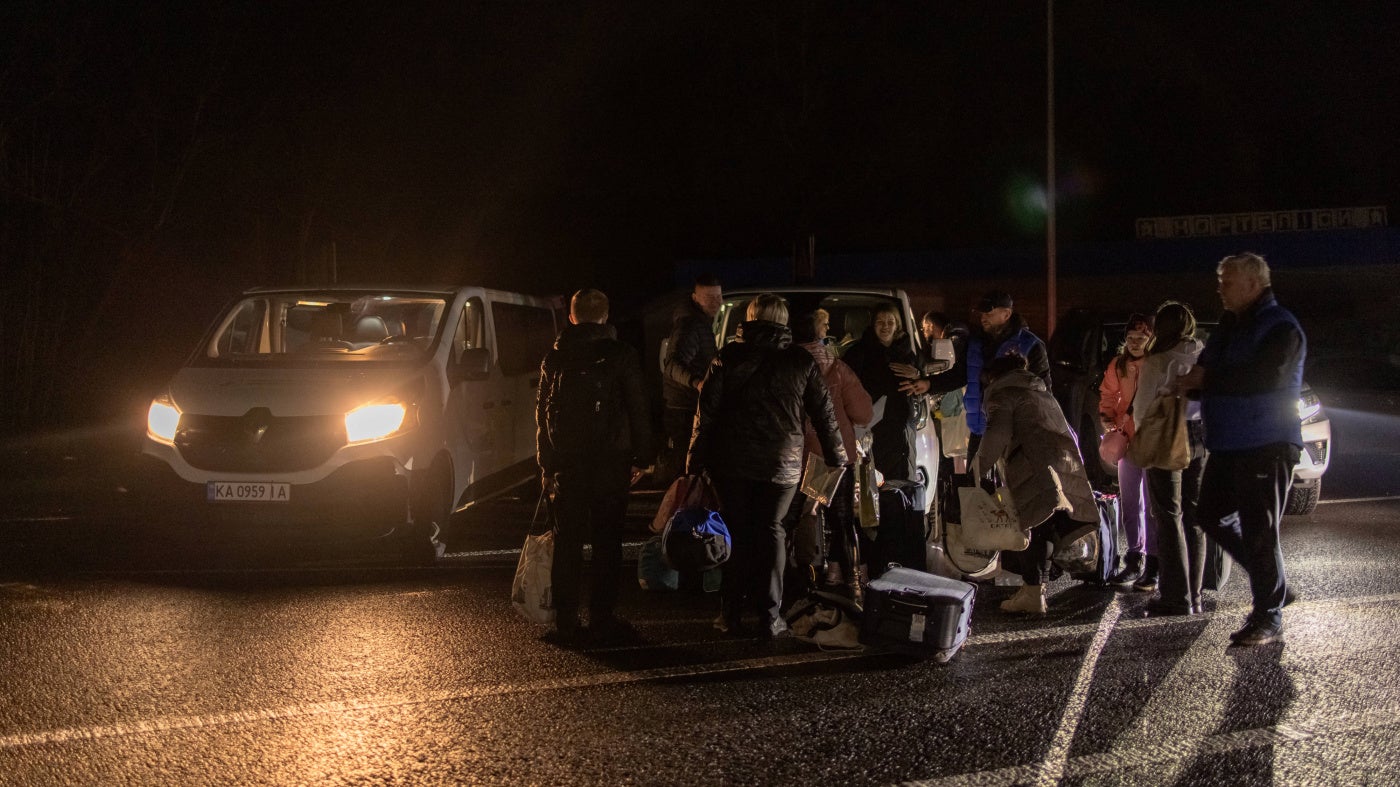
As the 2024-25 school year drew to a close, school workers and the occupation administration started pressuring Dmytro and his parents to register him for the draft. He was already 16—the draft registration age under Russian law. Police raids at their cottage became more frequent, and he and his family were growing increasingly anxious. They also knew that once he reached the mandatory draft age of 18, there would be no way for him to leave the occupied territories. In spring 2025, at great risk, the whole family managed to cross into government-controlled areas.
As we said our goodbyes, I told Dmytro, “Best of luck to you—and I so hope you’re now continuing your education in a local Ukrainian school.”
Dmytro shrugged… “Actually, I’m still doing it online.”
“Why?” I asked. “Don’t you miss proper school?”
“I’m apprehensive about going to a real Ukrainian school because my Ukrainian is not perfect—[won’t] the local kids use it against me? I was not in a position to speak the language for years under the occupiers. It got rusty,” he said.
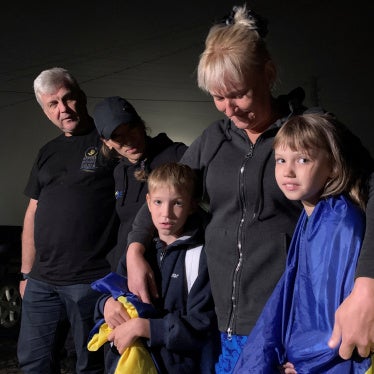
Dmytro and Halya escaped the occupation, but the effects the education system imposed on them haven’t ended. Years of intimidation, forced Russification, propaganda, and military pressure continue to shape how they see school, their language, and their place among other Ukrainians. Ensuring they experience their right to education as intended under human rights standards means more than giving them a place in a classroom. It also means providing the academic, linguistic, and psychological support they need to feel safe, develop, and thrive there.


