Peter lives near Monrovia, Liberia’s capital, with his mother and three younger sisters. He attended school through ninth grade, but after his father died his mother could no longer pay his public-school fees. So, at 15 he dropped out and began working in a carpentry shop and selling goods in the market. When I met him in January, he told me: “I had no choice but to help my mother so that my little sisters could attend school.”
The cost of education remains a key driver of child labor worldwide. As countries mark the World Day Against Child Labor, on June 12, an estimated 138 million children are still engaged in child labor, including 54 million in hazardous work. A possible new international treaty that would require free secondary education could make a big difference for children like Peter.
When education is free, families are less likely to send children into factories, farms, minesc or dangerous informal work simply to survive. Schooling protects children from exploitation and gives them the skills and opportunities needed to escape the poverty that drives child labor.
Yet progress toward free, quality education for everyone remains far too slow. Unesco’s latest figures show that the number of children out of school worldwide has risen for seven consecutive years, reaching 273 million.
I saw this firsthand in Liberia earlier this year. Liberia has one of the world’s highest rates of children out of school: 17 percent do not complete ninth grade, and at least one in three never attends school at all. Nearly four in ten children ages 12 to 14 work outside the home. My team and I interviewed nearly 180 children, parents and school staff, and we heard the same story repeatedly: Public-school fees push children out of classrooms and into work.
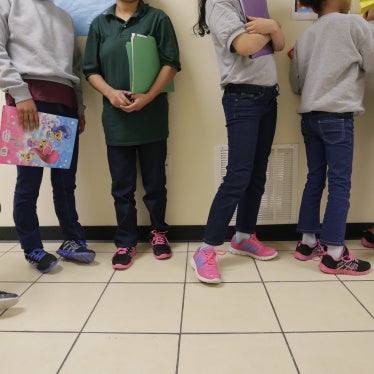
Many children said they worked before or after school to help pay their fees. Girls often sold goods in markets, while boys transported passengers or cargo on motorbikes. Others worked on farms.
One 13-year-old girl left her village because there was no school nearby and moved in with a woman near Monrovia so she could continue her education. But when her parents could not pay the public-school fees, she was forced to work for her guardian to pay her fees. “My guardian credits the money, and I have to pay it back by selling potatoes and greens in the market,” she said.
The International Labor Organization has identified free, quality education as one of the most effective tools for preventing child labor. Research in rural China, for example, found that one additional semester of free schooling reduced child labor by more than eight percentage points.
International law, however, fails to guarantee free education when it is needed most to prevent child labor. Existing human rights treaties guarantee free education only at the primary level. Historically, that commitment helped drive major gains: Nearly 90 percent of children globally now complete primary school. But enormous gaps remain at the pre-primary and secondary levels.
More than 70 percent of out-of-school children — 194 million — are of secondary-school age, while only 60 percent of children entering primary school have received at least one year of pre-primary education.
The United Nations Convention on the Rights of the Child — the world’s pre-eminent children’s rights treaty — says nothing about early-childhood education and does not require governments to provide free secondary education for all. These gaps in international law have allowed glaring inequalities in access to education to persist.
Explicitly recognizing rights
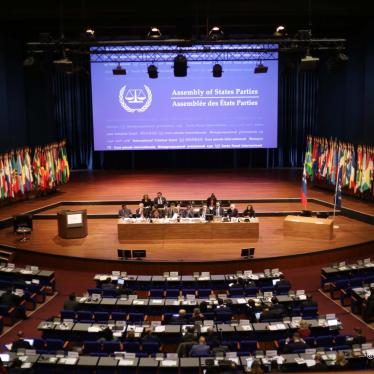
To close these gaps, Luxembourg, Sierra Leone and the Dominican Republic led a resolution at the UN Human Rights Council in 2024 to establish an intergovernmental working group to consider and elaborate a new optional protocol to the Convention. The aims of the protocol are to explicitly recognize the right to early-childhood care and education and to guarantee free public education from pre-primary through the end of secondary school.
Such a treaty would push governments to remove the financial barriers that keep children out of school and drive them into labor.
Sierra Leone, which eliminated school fees in 2018, is chairing the working group, which met for the first time in September 2025. At that session, most states taking the floor expressed support for the proposed protocol. To date, 60 countries from all regions have publicly expressed support for the initiative.
A new treaty will not solve child labor overnight. But when rights are recognized in binding international law, governments face greater pressure to act, implementation gaps become harder to ignore and children and families gain stronger tools to demand accountability. Previous treaties — on landmines, child soldiers and labor rights — have helped push legal and policy reforms that improved millions of lives.
Free education is one of the most powerful tools available to combat child labor. It gives children an alternative to exploitation and offers even the most vulnerable a path toward opportunity and dignity rather than hardship and poverty.
In August, the working group will reconvene in Geneva for a second time to consider key principles for the elaboration of the optional protocol’s text. The choice before governments is simple: Invest in free education or continue leaving millions of children like Peter with no option but work.