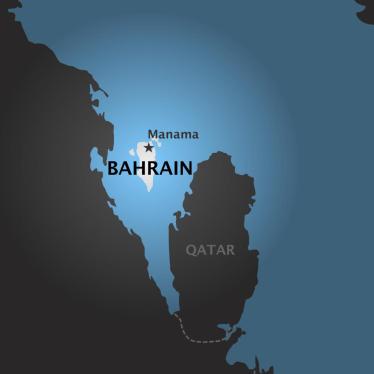
(Beirut) – The Bahraini government on April 27, 2026, revoked the nationality of 69 citizens, including infants. All were Shia Muslims of Iranian heritage, the Bahrain Institute for Rights and Democracy (BIRD) and Human Rights Watch said today. BIRD’s research found that at least 46 people, more than half of them children, were rendered stateless.
“Bahraini authorities have long discriminated against the country’s Shia majority population,” said Niku Jafarnia, Bahrain and Yemen researcher at Human Rights Watch. “But stripping people of nationality, claiming that they are citizens of a foreign country where most of them have no legal ties is an extreme escalation.”
BIRD and Human Rights Watch spoke to nine people affected and two relatives of others affected. Researchers also reviewed the Bahraini government’s related statements and decisions, as well as documents supporting the nationality of some of those affected.
Of those affected, 33 were children, including 10 toddlers, with the youngest only 19 days old, based on BIRD’s analysis, underscoring the arbitrary and collective nature of the measure. The majority of Bahrainis are Shia, who have long been oppressed by the Bahraini government.
The Ministry of Interior stated that the people stripped of citizenship are “of non-Bahraini origin.” While all are of Iranian descent, based on BIRD’s analysis—a background shared by up to 14 percent of Bahrain’s population—many of those interviewed said that their families had been in Bahrain for several generations and did not have Iranian nationality. Supporting documents reviewed showed that families had held Bahraini nationality for several generations, one of them for over a century.
One woman, whose husband and 9-month-old baby had been stripped of citizenship and left stateless, said of her husband: “Four generations [of his family] were born in Bahrain, all of them were born in Bahrain, he is Bahraini by birth. My kid, his father, grandfather, and their great grandfather are Bahrainis.” All of those interviewed said that the authorities had changed their nationality to Iranian.
On April 28, those stripped of nationality were ordered to go to the Passport and Immigration Authority, where they said they were forced to turn in their passports, IDs, and related papers.
One man, who said he was there from 8:00 a.m. to 5:00 p.m., described the scene: “They were looking at us as if we were their enemies ... we waited hours without water, without food.”
He and others were forced to sign documents stating that their nationalities had been revoked and that they would leave the country by an unspecified date. He was forced to sign these forms on behalf of his entire family, including other adults. The man added that Passport and Immigration police beat a man who refused to sign to compel his signature.
Bahraini authorities then began deporting some of them, attempting to send them to Iran but they did not succeed. Other people were sent to Türkiye, but Turkish authorities forced them to return to Bahrain. Thereafter, people interviewed said that Bahraini authorities detained them in a hotel and later sent some of them to Oman.
One man said the Bahraini authorities “treat[ed] us like mafia, like criminals, just wanting to throw us out.” One official directly threatened him with imprisonment, stating “if you come back to Bahrain ... you will not see the light of day again.”
Multiple families with roots in Bahrain reaching back at least two generations have been torn apart. One woman said: “Now [our] family is separated … [my sister] was crying because she left her child in Bahrain … three weeks [earlier], we were all gathering at my family house ... [Now], we are divided into four countries by force.”
The government has justified its action by citing counterterrorism efforts and regional tensions amid the US-Israel/Iran conflict. The Ministry of Interior stated that officials were acting on the basis of national security, claiming that the targeted individuals “expressed sympathy for, and glorified, Iran’s sinful hostile acts, or engaged in espionage with foreign parties.”
According to BIRD’s research, five of those stripped of their citizenship were prosecuted in proceedings that reportedly failed to meet international fair trial standards. One defendant was fined and sentenced to five years in prison solely for peaceful social media posts. Two others were sentenced to life imprisonment on espionage-related charges, while two received 10-year prison sentences for allegedly "filming" and "glorifying" the Iranian attacks. The defendants were reportedly denied access to legal counsel prior to appearing before the court, a longstanding concern in Bahrain's prosecution of political and national security cases.
The citizenship revocation comes on the heels of Bahraini authorities’ sweeping arrests of people who were exercising their right to peaceful expression amid the conflict. In some cases, Bahraini authorities have sought the death penalty, accusing the defendants of espionage.
The Bahraini government has discriminated against its Shia population for years, including by targeting Shia clerics and arresting and prosecuting human rights defenders of Shia backgrounds.
In 2019, Bahrain amended its citizenship law to allow officials to revoke citizenship based on a cabinet decision alone, removing the need for a royal decree. The changes also ended a requirement to publish the names and ID numbers of those affected, reducing transparency and making it harder to identify children stripped of citizenship.
In 2024, the Bahraini government issued a royal decree, amending the citizenship law by removing judicial oversight over citizenship revocations and classifying such decisions as sovereign acts, meaning there is no way to challenge revocation of citizenship.
Article 15 of the Universal Declaration of Human Rights, widely regarded as reflecting customary international law, states that everyone has the right to a nationality and that no one shall be arbitrarily deprived of his nationality. Article 13 of the Universal Declaration and article 12 of the International Covenant on Civil and Political Rights, which Bahrain has ratified, guarantee the right to enter one’s own country. In 1999, the Human Rights Committee, which interprets the covenant, stated that, “The scope of ‘his own country’ is broader than the concept ‘country of his nationality,’” and that it would apply to people who have been stripped of their nationality in violation of international law.
A United Nations report from 2013 states that, “International law … obliges States to provide for an opportunity for the meaningful review of nationality decisions, including on substantive issues.” The report states that if the citizenship of a national is revoked, “lodging an appeal should suspend the effects of the decision, such that the individual continues to enjoy nationality—and related rights—until such time as the appeal has been settled.”
Article 29 of the Arab Charter on Human Rights, which Bahrain has ratified, states that, “Every person has the right to a nationality, and no citizen shall be deprived of his nationality without a legally valid reason.”
“Close scrutiny of those accused of ‘threatening national security’ reveals that nearly half of them are children, including 10 toddlers who are now stateless,” said Sayed Ahmed Alwadaei, advocacy director at the Bahrain Institute for Rights and Democracy. “Many families who have lived in Bahrain for generations have been forced to leave their homes and, in some cases, leave their children behind. Bahrain’s rulers have been emboldened to commit these egregious violations of international law and get away with destroying the future of innocent children because of the silence of their backers in London and Washington. They must be held accountable.”