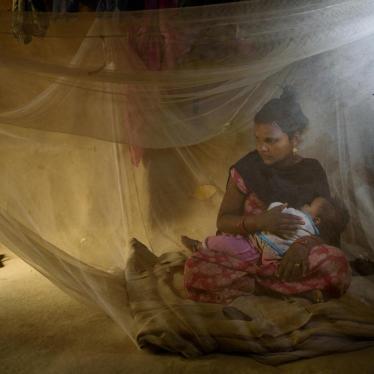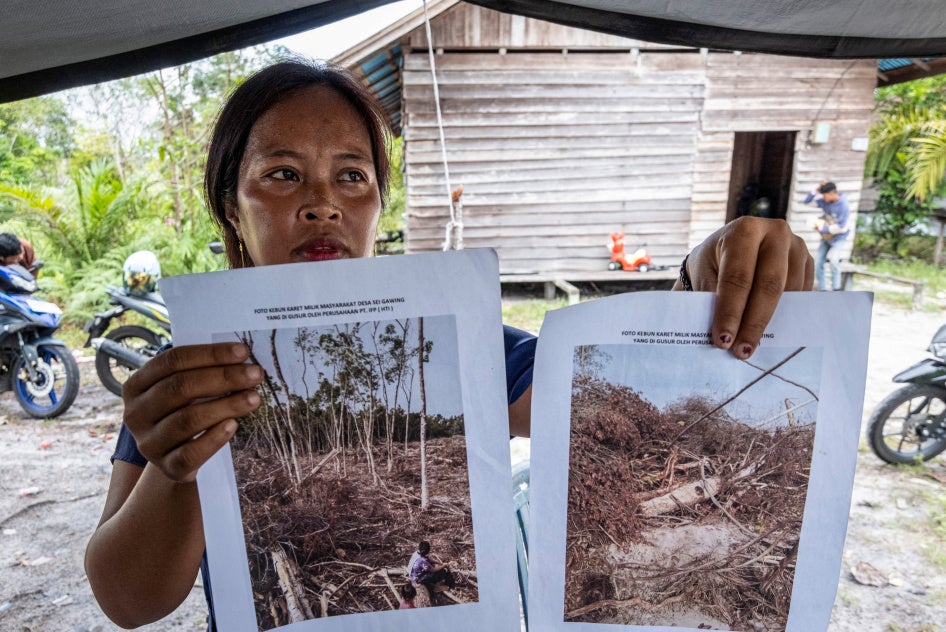
- インドネシア政府当局は、森林破壊や汚染に抗議する環境活動家、そして自らの土地の権利を守ろうとする先住民族リーダーを不当に訴追している。
- プラボウォ政権は、国有の鉱業、アブラヤシ農園、インフラ事業、いわゆる「食料・エネルギー・エステート」における軍の役割を拡大し、表現の自由への締めつけを強めている。
- 政府は、人権侵害に抗議する人びとを処罰するのではなく、土地や環境被害に関する公正な紛争解決こそを行うべきである。
(ジャカルタ)― インドネシア政府当局は、森林破壊や汚染に抗議し、あるいは土地の権利を擁護する環境活動家や先住民族コミュニティのリーダーを不当に訴追していると、ヒューマン・ライツ・ウォッチは本日発表の報告書で述べた。2024年の就任以来、プラボウォ・スビアント大統領の政権は、国有の鉱業、アブラヤシ農園、インフラ事業、いわゆる「食料・エネルギー・エステート」における軍の役割を拡大し、表現の自由への締めつけを強化してきた。
報告書「奪われた土地、封じられた正義:インドネシアにおける環境活動家と先住民族リーダーへの迫害」(全70ページ)は、企業幹部や政治家からの告訴・告発を受けたインドネシア警察が、慣習的な土地の権利を求める先住民族の村人と、そうした人びとを支援する活動家をいかに黙らせてきたかを検証した報告書。政府当局は刑法などの法律を用い、名誉毀損から「共産主義の流布」に至るまでの罪状で環境活動家や先住民族コミュニティのリーダーを標的とし、環境破壊への抗議を封じ込めてきた。
「歴代のインドネシア政府は、強制立ち退き、慣習地の喪失、森林破壊に抗議する活動家や先住民族リーダーを根拠のない罪で訴追し、黙らせようとしてきた」と、ヒューマン・ライツ・ウォッチのアジア局長エレイン・ピアソンは指摘する。「プラボウォ政権は、企業の汚職を取り締まる一方で、地域コミュニティの訴えを無視し、軍の投入をはじめとする強硬な手段で経済目標を推し進めてきた。」
ヒューマン・ライツ・ウォッチは、ジャワ島、スマトラ島、カリマンタン島、スラウェシ島、モルッカ諸島およびパプア6州における2015年から2025年までの50件超の事例を検証し、活動家やコミュニティリーダーを標的とするために用いられた具体的な法律・法規定の実例として、SLAPP(スラップ:市民参加を妨害するための戦略的訴訟)を含む15件の著名な事例を選んだ。本報告書は、村人、先住民族リーダー、環境活動家のほか、弁護士、研究者、政府当局者への69件の聞き取り調査と、警察・裁判所文書の検討に基づいている。
ヒューマン・ライツ・ウォッチの調査は、警察と検察が乏しい証拠に基づき抗議した人びとを犯罪容疑で訴追してきたことを明らかにした。ほかの事例では、政府当局は農園法、鉱物・鉱業法、雇用創出法、森林破壊防止法の規定を用いた。上級審は最終的に大半の訴えを退けたものの、標的とされた活動家は、根拠のない裁判への反論と対応に長い月日を費やさざるを得なかった。
名誉毀損罪で訴追されたが最終的に無罪となった人権弁護士のハリス・アズハル氏はこう語る。「オリガルヒ(新興財閥)と警察からの攻撃をはねのけるために、多くの時間とエネルギーを費やさなければならなかった。アドボカシー活動を積み上げ、専門家としてのキャリアを発展させる機会を失った。」
インドネシアは世界最大のパーム油生産国であり、金、木材、紙・パルプの主要生産国でもある。また、鉄鋼や電気バッテリーの主要材料であるニッケルの世界最大の供給国だ。プラボウォ政権は「食料・エネルギー・エステート」の建設に軍を投入し、南パプアの地域コミュニティを立ち退かせている。
2025年初め以降、プラボウォ政権は汚職の疑いを理由に農園、鉱山、その他資源の豊富な土地の管理権を接収し、約600万ヘクタールのアブラヤシ農園などを国有企業に引き渡した。しかし、対象企業を調査する政府タスクフォースのメンバーの一部には重大な汚職疑惑をかけられている。
インドネシアが批准している国際人権条約の下、政府には、生命、身体の自由、言論、平和的な集会、結社などの権利を擁護する義務がある。この保護義務には、企業による人権侵害を防止すること、そして侵害が生じた場合には企業の責任を追及し、被害者に救済を提供するための措置をとることが含まれる。
企業には、2011年の国連「ビジネスと人権に関する指導原則」に基づき、人権侵害を引き起こしたり、それに加担したりすることを避ける責任がある。インドネシア政府は、国内で事業を行う企業に対し、事業活動が人権に及ぼす影響への対処を法的に義務づける法案を起草しているが、いまだ議会に提出していない。
プラボウォ政権は、環境活動家や先住民族リーダーへの嫌がらせ、威嚇、不当な処罰のためにインドネシアの刑事司法制度を悪用する行為を終わらせる措置を講じるべきだ。また、特にスマトラ島、カリマンタン島、スラウェシ島、モルッカ諸島、パプア6州などにおいて、企業と地域コミュニティ間の土地紛争の迅速かつ公平な解決を確保すべきである。これには、慣習的土地権のマッピングを進めてきた「先住民族登録(Registration of Indigenous Peoples)」と協議のうえ、違法な農園や鉱山事業を接収した際には伝統的な所有権を回復することが含まれる。
「インドネシア政府は、住民から土地を勝手に取り上げるようなことが、これまでのように当たり前にまかり通る時代はもう終わりだ、とはっきり示す必要がある」と、前出のピアソン局長は述べた。「政府当局は、深刻な人権侵害に抗議する人びとを処罰するのではなく、公正な紛争解決こそを行うべきである」
証言は以下をご覧ください。
Police arrested James Watt, an Indigenous Dayak farmer, who was living in Seruyan, Central Kalimantan, and championing sustainable agriculture in Jakarta on March 7, 2020, based on complaints by a company that the Dayak villagers had “harvested” palm fruits from a disputed 117-hectare site. Police also arrested two other farmers, Hermanus and Dilik. Hermanus died in police detention after being denied proper medical attention. On June 15, 2020, the Sampit district court found James Watt and Dilik guilty of stealing the oil palm fruits under the Plantation Law, sentencing James Watt to 10 months in prison and Dilik to 8 months.
“The Indigenous community's rights were lost, and those who dared to question that decision were criminalized,” James Watt told Human Right Watch. “The governor [of Central Kalimantan] wrote a letter, declaring that those 117 hectares were outside the company’s HGU [right to use land]. His letter was simply ignored. The 10 months in prison is not a short time for me. The dramatic arrest in Jakarta, poor prison cells, and losing a friend [Hermanus], they all have a psychological impact. My good name, my time to be with my three children, my responsibility to find food for my family, to take care of my farm, these are losses that I must bear. They grabbed our lands, silenced those that sought justice. The injustice is clear.”
Haslilin, a homemaker in Torobulu village, South Koname, Sulawesi Island, joined a protest against pollution caused by a nickel mining company on November 6, 2023. The villagers had repeatedly asked the company, as well as government officials, for the environmental impact assessment report (AMDAL), but their demands had gone unheeded. In March 2024, the police charged Haslilin and Andi Firmansyah, another villager, with “hindering” mining operations. On October 1, 2024, the Andoolo district court acquitted them, finding their assertion of a right to a healthy environment legitimate.
“The company began to dig in 2021,” Haslilin said. “It was okay then, pretty far from the residential areas, but by 2023, it had become unbearable because they were digging very close to our houses. My youngest child has lung problems. Our water is polluted. We were curious how this could have happened and wanted to see their AMDAL [environment assessment report]. But they ignored us. So, I stopped the excavator, climbing the wheel and demanding that the operator show me the document. He did not have it. I was protesting because my village, my environment, is destroyed.”
Police arrested Sorbatua Siallagan, an elder of the Indigenous Ompu Umbak Siallagan community in Simalungun, North Sumatra, on March 22, 2024, charging him with theft and arson, including burning eight eucalyptus trees belonging to a pulp and paper company. He was detained for seven months, and finally acquitted by the Supreme Court in June 2025. In January 2026, the Indonesian government revoked the company’s permits along with those of 27 others after authorities linked their alleged forest misuse to floods in Sumatra. Siallagan welcomed the government’s actions but said that the company’s security personnel still patrolled the overlapping territory.
“They wouldn’t let us in” he said. “My friends were angry. The government should let the community return to their land, including for sacred rituals. We ask the government to truly return the land to us.”
Villagers in the Tumpang Pitu area, Banyuwangi, East Java, organized a protest on April 4, 2017, outside the gate of a gold mining company they alleged had polluted the water, air, and soil, displaying protest banners. The company reported that one banner had a hammer and sickle. Police charged Heri Budiawan, nicknamed Budi Pego, a farmer involved in the protest, with “spreading communism.” On September 4, 2017, the Banyuwangi district court sentenced him to 10 months in prison. He appealed, saying that the banner, which was not presented in court, was not theirs. In October 2018, the Supreme Court upheld the decision, sentencing him to four years in prison. He was granted parole in November 2024. He said the villagers were continuing their fight but were demoralized.
“I have concluded that it’s impossible to find the truth and to seek justice in Indonesia,” he said “The court has never presented that particular banner, only the photo. Our strength has been weakened.”