
Summary
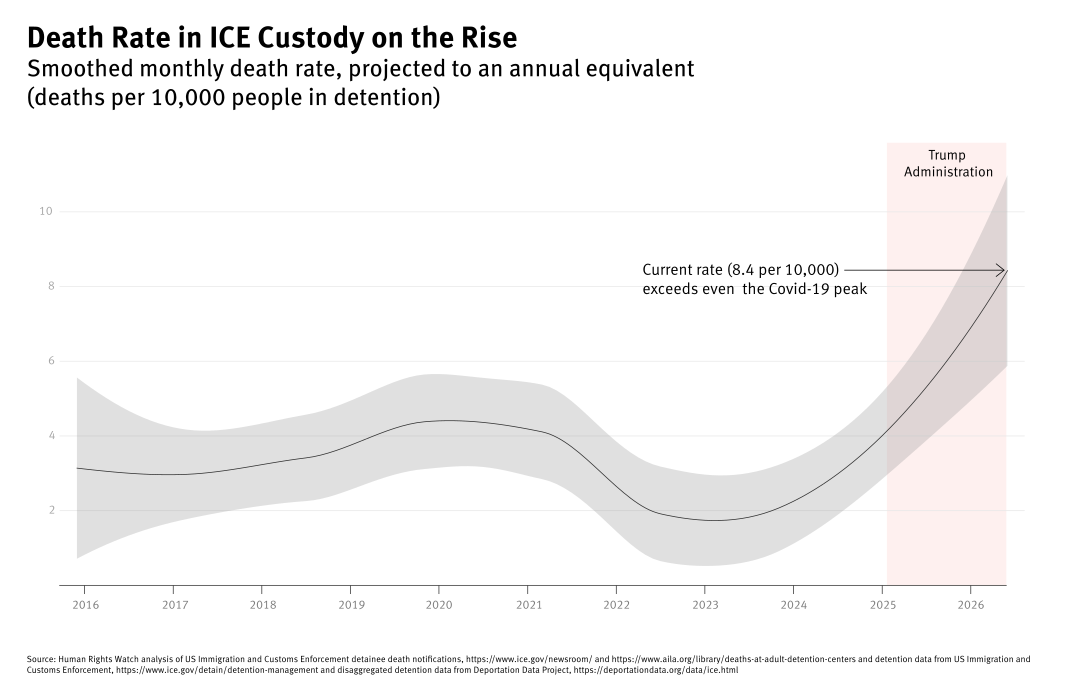
In the 500 days between President Donald Trump’s inauguration on January 20, 2025 and June 4, 2026, 52 people died in Immigration and Customs Enforcement (ICE) custody in the United States. The mortality rate of deaths in ICE custody is at its highest level in over a decade and has more than doubled since Trump’s second term began. The rate is nearly four times that of the Biden administration, and more than two and a half times as high as that of the first Trump administration. The current trend-level rate is now even higher than during the Covid-19 pandemic. Urgent action is needed to address this crisis and prevent further deaths.
The second Trump administration launched an aggressive campaign to expand immigration detention, pushing the number of people held to a record high of over 71,000 people in January 2026. The surge in deaths is much worse than what one would expect even considering the much higher number of people in detention. Deaths in ICE custody have increased at a rate disproportionate to the growth in the detained population. January 2025- January 2026 saw an approximately 140 percent increase in the annual mortality rate compared to the prior year.
Methodology
This report draws on two overlapping bodies of analysis. The statistical analysis covers all 52 deaths in ICE custody over the first 500 days of the second Trump administration, from January 20, 2025 to June 4, 2026, and compares the mortality rate with data spanning the past two decades. The medical and human rights analysis focuses on the 39 deaths reported in the first 12 months of the second term, from January 20, 2025 to January 19, 2026, the period for which case documentation was available at the time of review. Medical experts from Physicians for Human Rights assessed the clinical circumstances preceding each death and the adequacy of care described in available documentation, including supplementary medical records in two cases. Human Rights Watch conducted interviews with family members, attorneys, and former cellmates of the deceased.
Findings: Deaths in ICE Detention Indicate Violations of ICE Policy and International Human Rights Law
Under international human rights law, the state has an obligation to respect and ensure the right to life. When a government detains a person, it has a heightened obligation to protect their rights, and to this end must provide adequate health care and other protections. In the case of a death in custody, the government should also provide all relevant information to the family, including medical reports and investigations into the death.
Failure to Ensure Transparency and Public Accountability for Deaths
ICE policy requires public disclosure of a death of a person in custody within 48 hours and more detailed public reporting of the facts and circumstances surrounding the death within 30 days. Physicians for Human Rights found that, in all 39 cases, the government did not publicly provide sufficient information about the circumstances of death or about the medical care provided in detention to support a definitive clinical assessment. The available documentation was often scant, but it was nonetheless sufficient to identify serious concerns about the care provided.
The lack of medical information in published government records, including about medical care requested and provided, severely limits external medical expert review. The government has systematically failed to report deaths in custody in a timely and comprehensive way, and to be transparent about the medical care provided during detention.
The family of one man who died in ICE custody in 2025 has been trying to access additional records on his case. His mother is desperate to know more about the care he received and the conditions he was held in before his death, and wants access to any available surveillance footage. “What I want is for them to investigate,” she told Human Rights Watch.
Evidence of Inadequate or Delayed Care
Based on available information, Physicians for Human Rights medical experts had a high suspicion of inadequate or delayed health care in several of the 39 deaths that occurred during the first year of the current administration, raising serious concerns that the deaths may have been preventable.
Examples of the types of circumstances and clinical details that raise concerns that a death may have been preventable include: worsening respiratory symptoms without intervention until the person was found unresponsive; people who did not have more frequent medical evaluations when they had known hypertension and worsening symptoms such as headaches; individuals who died from sepsis and had known risk factors for sepsis (such as an immunocompromised state or indwelling central venous catheter) but no blood cultures drawn or antibiotics given when febrile; cases where contradictory medical instructions were given to patients; and delays in starting cardiopulmonary resuscitation (CPR) for persons found unresponsive.
In one case, Maksym Chernyak, a 44-year-old man from Ukraine, suffered a stroke in detention. Despite having clear signs of an emergency including seizure-like movements and non-reactive dilated pupils, detention facility staff failed to ensure appropriate emergency medical care. Delays in getting him to higher level medical care almost certainly contributed to his death.
In another case, Ismael Ayala-Uribe, a 39-year-old Mexican citizen, reportedly died from cardiac arrest that PHR assessed likely arose from overwhelming septic shock. His repeated attempts to obtain appropriate medical help for an infected abscess were recurrently mishandled.
Santos Banegas Reyes, a 42-year-old Honduran citizen, was “cleared for detention within two hours of arrival” despite being identified during medical intake as being in active alcohol withdrawal. ICE’s reporting on Banegas Reyes fails to identify why he was not sent to a hospital for care or, at a minimum—as would be the standard of care for someone with unknown risk of future severity of withdrawal and thus with potential to progress to life-threatening withdrawal—observed more closely within the detention center’s medical unit. He was found unresponsive in his cell during morning count the day after his arrival and was declared deceased shortly after.
The facts of these and other cases suggest that the United States is failing to meet its obligations to respect and ensure the right to life and to ensure adequate health care in detention.
In addition to such cases, the high number of people who died by apparent suicide in detention is also a serious concern. According to ICE records, seven people died by apparent suicide from January 20, 2025 to January 19, 2026. This compares to one reported death by suicide in 2024.[1] In a custodial environment, the state has significant capacity to monitor wellbeing and safety, and to prevent and respond to attempted suicide. The high number suggests that the state may be failing to adequately respond to the risk of suicide.
Poor Conditions of Detention including Inadequate Staffing and Gaps in Health Care
The dramatic rise in the rate of deaths in detention is a foreseeable outcome of the Trump administration’s immigration policies and practices. Drawing on Physicians for Human Rights and Human Rights Watch’s decades of experience documenting deaths in detention and patterns of abuse in immigration detention, this report finds that the high numbers of deaths in 2025-2026 are likely fueled by both long-term systemic problems as well as new changes implemented by the second Trump Administration.
Long-term concerns about US immigration detention include poor conditions in detention facilities, such as unsanitary facilities and inadequate food, which contribute to illness and disease. They also include sub-standard health infrastructure and services in detention centers, which contribute to poor quality and delayed medical care for individuals with physical or mental health conditions or a health emergency. There has long been inadequate staffing at detention centers to ensure proper monitoring and responsiveness to individuals in detention, and inadequate and delayed publication of information about detainee deaths, undermining public accountability.
The second Trump administration has exacerbated these problems and created new ones, including:
Restrictions on legal immigration pathways and the expansion of mandatory detention have swept more people into custody and prolonged their confinement.
Soaring detention numbers since January 2025 expose more people to poor detention conditions and lead to more crowded facilities, which in turn worsens sanitation concerns and further strains the provision of health care. This report found that most of the 39 deaths occurred in facilities that had significantly elevated population levels in the two weeks leading up to the deaths (as compared with the previous three-year average population in these same facilities);
The second Trump administration dismantled or rendered ineffective oversight mechanisms for Department of Homeland Security (DHS), ICE’s parent agency, which were flawed but important mechanisms for preventing and investigating deaths in custody; and
Changes to the system for processing claims for offsite health care for detained immigrants raise concerns about gaps in health care and coverage.
Violations of ICE Policy, UN Standards, and UN Human Rights Treaties
The United States has obligations to protect the lives and health of those in its custody. The deaths of people in US immigration detention raise concerns that the United States has violated the International Covenant on Civil and Political Rights (ICCPR), which protects the right to life and obligates states to take steps to safeguard the lives of those in custody. The mistreatment of people in immigration detention contravenes the UN Standard Minimum Rules for the Treatment of Prisoners (Mandela Rules), which, among other things, call for prompt access to medical care and prohibit delays in emergency response, as well as ICE standards on medical care and suicide prevention. Those ICE standards include the requirement that people in detention be able to communicate urgent needs to staff and receive timely responses. Poor detention conditions and the failure to provide adequate medical care can also amount to violations of the prohibition against cruel, inhuman, or degrading treatment of the ICCPR and the Convention Against Torture (CAT), treaties ratified by United States, as well as the guarantee of humane treatment for people deprived of their liberty under the ICCPR.
Conclusion
For the United States to meet its human rights obligations and prevent more deaths in ICE custody, immediate action is needed to reduce the numbers of people in detention and to improve overall detention conditions, including by using detention only as a last resort. The government should ensure competent medical and mental health screening at intake, ensure adequate medical staffing and resources to those detained equivalent to that available in the broader public community, including mental health care, guarantee uninterrupted access to offsite care, and conduct periodic health assessments. The government should also provide remedies to the families of people whose death resulted from violations of US human rights obligations, restore independent oversight of DHS, and mandate transparent, comprehensive, and timely reporting of deaths and the conditions and decisions that led to them. State and local governments, private detention operators, and UN human rights bodies all have a role to play in upholding these standards.
Recommendations
To the US Congress
Human Rights Watch and Physicians for Human Rights urge the US Congress to take the following steps:
- Withhold all appropriations for ICE detention expansion and oppose all new requests to fund expanded detention capacity.
- Acknowledging the constraints on previous DHS oversight offices, create a new, sufficiently resourced, independently-mandated entity composed of medical doctors and public health experts with statutory oversight authority and jurisdiction over the quality of medical and mental health services in ICE detention to investigate deaths, inspect facilities, and enforce compliance with medical care standards. Require ICE and its contractors to establish and implement local independent medical oversight boards at individual detention facilities. Require regular reporting by these oversight bodies to Congress.
- Mandate ICE to contract independent investigations by external medical experts, including forensic experts, of all in-custody deaths, within 30 days, with the findings made publicly available. These should include investigative accounts detailing causal factors contributing to each death, including examining both actions taken and failures to act, and clarification on how specific decisions, omissions, or systemic conditions led to the outcome.
- Investigate the termination of the Veteran’s Administration (VA) Financial Services Center third-party claims processing arrangement and the transition to new contractors, and require ICE to report publicly on whether offsite medical claims are being processed and whether any care was delayed or denied during the gap in claims processing.
- Immediately conduct robust oversight of ICE detention, including through proactive and effective use of subpoena authority and investigations into the conditions documented in this report. Establish a special or select committee to investigate deaths in ICE and Customs and Border Protection (CBP) custody, as well as medical care, mental health services, and the use of segregation or “solitary confinement” in immigration detention. Rely on third-party evaluations by medical and human rights experts of DHS compliance to identify and mandate measures to improve detention conditions.
- Require that ICE make publicly available on its website, as a matter of course, Detainee Death Reviews, Healthcare and Security Compliance Analyses, Mortality Reviews, Root Cause Analyses, autopsy reports, and psychological autopsy reports, for all individuals who have died in ICE custody regardless of location of death (i.e. whether in detention or in a healthcare setting). Ensure explicit disclosure of cause of death. Make only those redactions necessary to comply with federal privacy laws. Legally mandate initial reporting within 48 hours of a detainee death, and more comprehensive reporting within 30 days. Impose penalties on ICE for failure to comply with reporting requirements, including through funding restrictions, and when appropriate, congressional contempt proceedings.
Hold ICE accountable for meeting specific standards outlined in the National Detention Standards (NDS) for all non-dedicated facilities, and the Performance Based National Detention Standards (PBNDS) for all ICE custody dedicated facilities with regard to provision of care and data reporting, including through additional reporting requirements, funding conditions, and, where appropriate for individual officials, congressional contempt proceedings.
Require increased transparency regarding the immigration detention system, including eliminating exemptions under the Freedom of Information Act (FOIA) that have been applied to private companies operating detention centers.
Require ICE to use detention as a last resort and, when supervision or monitoring are necessary, to prioritize alternatives to detention to avoid unnecessary detentions and overcrowding and associated physical and mental health risks.
To the Department of Homeland Security
Ensure competent medical professionals conduct prompt, thorough, and professional screening of people entering ICE custody to identify medical conditions and disabilities including mental health conditions, and any characteristics that would place the person at particular risk in a detention setting.
Issue a directive to facilitate, to the maximum extent possible, the prompt release from ICE detention of individuals who face particular risk in detention settings, including people with disabilities; those with mental health conditions; individuals with serious medical conditions; and those who are pregnant or postpartum. The directive should establish a presumption of release for these individuals; require prompt medical and mental health screening upon intake to identify those who face heightened risk of harm in detention; and set out clear procedures to secure their release from custody without delay.
Rescind mandatory detention, which has resulted in overcrowded and overwhelmed detention facilities.
Impose disciplinary consequences for violations by agents and relevant personnel.
To Immigration and Customs Enforcement (ICE)
Take immediate steps to reduce detention, utilizing, where supervision or monitoring are necessary, alternatives such as community-based supervision programs and parole.
Refrain to the extent possible from detaining individuals with serious medical needs, or persons with physical or psychosocial disabilities.
Ban the use of prolonged or indefinite segregation or “solitary confinement” in immigration detention (whether for administrative or disciplinary reasons) and prohibit without exception the use of segregation for groups more likely to be severely impacted by isolation, including people with psychosocial disabilities. When necessary to isolate individuals with highly communicable diseases, transfer them to dedicated medical isolation units within the detention center’s health care wing or transfer them to an outside healthcare facilities with adequate medical isolation capabilities. Do not utilize administrative segregation in detention centers for medical isolation.
If people with disabilities are detained, provide reasonable accommodations and ensure individualized support and necessary accessibility measures to allow them to exercise their rights on an equal basis with others, while working to ensure their prompt release.
Improve mental health services by ensuring that services are available to anyone in detention, regardless of whether they have a medical diagnosis of a disability, that there are sufficient numbers of qualified mental health professionals, that treatment is based on free and informed consent, that there are adequate resources, and that levels of care meet standards of community health care. Ensure all detention facilities have clinical staffing plans and publicly disclose whether positions are filled as a compliance component during ICE Enforcement and Removal Operations (ERO) and Office of Detention Oversight (ODO) inspections.
Ensure that detained people have timely access to offsite and specialty medical care, including by maintaining a functioning, uninterrupted system for authorizing and paying for that care.
Require that detainee death investigations include subject matter experts with sufficient expertise to evaluate clinical decisions and conduct a full mortality review focused not solely on technical compliance with standards but the factors contributing to any determination of inadequate care.
Reform the monitoring system to task a single fully independent entity with responsibility and authority for reviewing and approving corrective action plans, monitoring compliance with applicable standards, and imposing sanctions for non-compliance, including closure of detention centers.
To State and Local Governments
Increase state and local oversight capacity, especially over subcontracted local jails, by authorizing monitoring and reporting on immigration detention conditions.
Decline to contract with ICE and private prison companies to expand immigration detention capacity.
Safeguard the basic rights of people in detention by passing legislation or enacting policy reforms ending prolonged or indefinite segregation (or “solitary confinement”) in locally contracted facilities, including by banning the use of isolation for groups disproportionately impacted by isolation, including people with psychosocial disabilities.
To Private Contractors Operating Detention Facilities
Ensure that facility operations comply with international standards, including the UN Standard Minimum Rules for the Treatment of Prisoners (the Mandela Rules), to uphold detained individuals’ rights and dignity.
Ensure that all facility operations comply with the Performance Based National Detention Standards and the National Detention Standards.
Enact policies and procedures that align with international human rights law, relevant domestic laws and jurisprudence on the rights of people in detention, anti-discrimination practices, medical and mental health care procedures and standards, appropriate use of segregation, and appropriate use of force, to prevent abuses and misconduct, and train staff on those policies and procedures.
To the UN Committee Against Torture and the UN Human Rights Committee
- In forthcoming reviews of the United States as part of the state reporting procedure, make recommendations to the United States to comply with the UN Standard Minimum Rules for the Treatment of Prisoners (the Mandela Rules) and relevant international human rights standards.
To the Office of the UN High Commissioner for Human Rights, the UN Special Rapporteur on Torture, and the UN Special Rapporteur on the Human Rights of Migrants
Investigate allegations of ill-treatment in US immigration detention, consider fact-finding visits and regular monitoring of both public and private US immigration detention centers, and report publicly on the findings.
Call on the US government to comply with the UN Standard Minimum Rules for the Treatment of Prisoners (the Mandela Rules) and other relevant international human rights standards.
Methodology
This report draws on research conducted by Human Rights Watch and research and medical analysis by Physicians for Human Rights. The report qualitatively analyzes available information on the 39 deaths in ICE custody from January 20, 2025 to January 19, 2026. The primary quantitative analysis of deaths in ICE custody extends from October 1, 2015, through June 4, 2026, though data extending back to 2004 was used to corroborate the findings of external researchers.
The report refers to “ICE custody deaths” as all deaths that have been reported through ICE’s Detainee Death Reporting (DDR) system.[2] This number includes at least two cases where the person died apparently fleeing ICE apprehension, and two cases where individuals were fatally injured during a sniper attack on a detention center. This number does not include deaths that occurred during immigration enforcement activities that were not reported through ICE’s Detainee Death Reporting system: for example, deaths resulting from the use of force in the community where there was no apprehension or arrest were not reported through this system and are therefore not included in the dataset examined.
ICE is supposed to publish Detainee Death Notifications (DDNs) within two business days of a death on ICE’s Newsroom website, per its own policy. DDNs are brief public notices containing basic identifying and demographic information about the deceased and very limited information about the death itself. Per ICE policy, ICE also publishes Detainee Death Reports (DDRs) within 30 days of a death, which provide a brief narrative of the person's medical intake, clinical encounters, and the circumstances preceding death. DDNs were available in 38 of 39 cases, and DDRs were available in all 39 cases at the time this analysis concluded, although they were frequently delayed in their publication by ICE.[3]
Physicians for Human Rights reviewed the available DDNs and DDRs for the 39 deaths from January 20, 2025 to January 19, 2026, and, in two cases, supplementary outside (non-ICE) medical records. Human Rights Watch obtained informed consent from relatives of the deceased individuals for the medical experts to review these supplementary records. From Physicians for Human Rights, one medical expert reviewed all available information for all 39 cases, and two medical experts reviewed all information for the two cases with supplemental medical documents. Medical review consisted of qualitative analysis of the medical histories of the deceased individuals as well as the care they received while in ICE custody as described in ICE’s limited reporting. Review also included quantitative analysis of the demographics and clinical characteristics of those who died during the primary study period.
Human Rights Watch interviewed 17 people, including family members and others with close knowledge of 12 of the deceased individuals, and obtained and reviewed information related to the individuals’ known medical history, information the individual relayed to the interviewee about the care they received or needed but did not receive in ICE custody, and contextual information relevant to their cases. Human Rights Watch researchers informed all interviewees about the purpose and voluntary nature of the interviews, and the ways in which Human Rights Watch would use the information. Human Rights Watch obtained consent from all interviewees, who understood they would receive no compensation for their participation.
Human Rights Watch compiled publicly available information about the date and location of deaths of individuals in ICE custody from October 1, 2015, through June 4, 2026. Data on deaths prior to 2025, which are no longer available on ICE’s Newsroom site, were downloaded from the collection compiled by the American Immigration Lawyers Association (AILA).[4] Human Rights Watch analyzed ICE detention data from public data releases to calculate system-wide and facility-specific daily detention populations. Disaggregated detention data of detained individuals, downloaded from the Deportation Data Project, was used for the periods between December 2015 and March 9, 2026. For the period after March 9, interval average daily populations were calculated using ICE data releases.[5] Daily detention population figures after April 9, 2026 were held constant at the last recorded value from ICE's April 9 data release. All quantitative analysis was conducted by Human Rights Watch in R, a programming language for statistical analysis. This analysis, which is available for review, also underwent external review by two independent statisticians.[6]
Human Rights Watch and Physicians for Human Rights sent a letter to then-Homeland Security Secretary Kristi Noem on January 9, 2026, and to the current Homeland Security Secretary, Markwayne Mullin, on May 13, 2026, sharing these findings, posing questions, and offering the opportunity to reply, but had not received a response at time of writing. Human Rights Watch and Physicians for Human Rights sent letters to CoreCivic, the GEO Group, and Acentra Health on May 29, and Akima Global Services on June 5 with preliminary findings, questions, and the opportunity to reply. Human Rights Watch received a reply from Acentra Health, which is reflected in this report, and included as an appendix.
Physicians for Human Rights obtained Ethical Review Board approval for this research.
Technical Note and Glossary
ICE Custody Deaths: For the purposes of this report, the definition of a death in ICE Custody includes any death included in an ICE Detainee Death Notification (DDN) or Detainee Death Report (DDR) from ICE’s newsroom site and/or library. ICE has not issued notices for all people killed by use of force in immigration enforcement operations. Not every death reported by a DDN or DDR occurred in a detention facility. Among the 39 people who died during the primary study period, there are two people killed by sniper fire during an attack on a detention center, one person shot by an ICE officer apparently attempting to detain him, and another killed in traffic while being pursued for arrest by ICE.
Detention days: The total number of days that detained people were held, with one day of detention for one detained person counting as one day. If one person is held 20 days and another held for 10 days, this would equal 30 detention days in total. This measure is used to describe the detention population system-wide and per facility over time.
Detention population: The detention population includes everyone under ICE Enforcement and Removal Operations (ERO) custody. It does not include people held by Customs and Border Protection and excludes people who are deported by ICE but do not enter ERO detention.
Mortality rate: This is the number of deaths per number of people detained. Throughout the report we use a mortality rate per 10,000 ICE detainees.
Annualized mortality rate: This is the number of deaths per 10,000 detained people adjusted for the whole year. As an equation, the standard formula is (number of deaths ÷ average daily detention population ÷ number of days observed) × 365 x 10,000. This allows meaningful comparison across time periods with different detention levels and accounts for random monthly variation.
Trend-adjusted annualized mortality rate: The trend-adjusted mortality rate uses a statistical method (in this case, the LOESS model) to smooth out month-to-month variations in the data and look at the overall trends in the mortality rate.
I. Statistical Analysis of Immigration Detention and Deaths
Thirty-nine people died in ICE custody during the first year of the second Trump administration (January 20, 2025 to January 19, 2026), marking the highest number of annual deaths in ICE detention since ICE was established in 2003. At least 13 more people died in the first five months of the second year of this presidency. Although the detained population has grown in recent months, the number of deaths has increased at a disproportionately higher rate, indicating that increased detention alone does not account for the rise in mortality.
Surge in Immigration Detention
Immigration detention numbers have soared since President Trump was sworn in for his second term on January 20, 2025. There was a surge in immigration detention during the first Trump administration as well, but numbers were lower than they have been this term. There was also a notable drop off in the number of people in immigration detention during the last year of Trump’s first term, which coincided with the start of the Covid-19 pandemic, as ICE released thousands of people from its detention facilities as a public health measure.
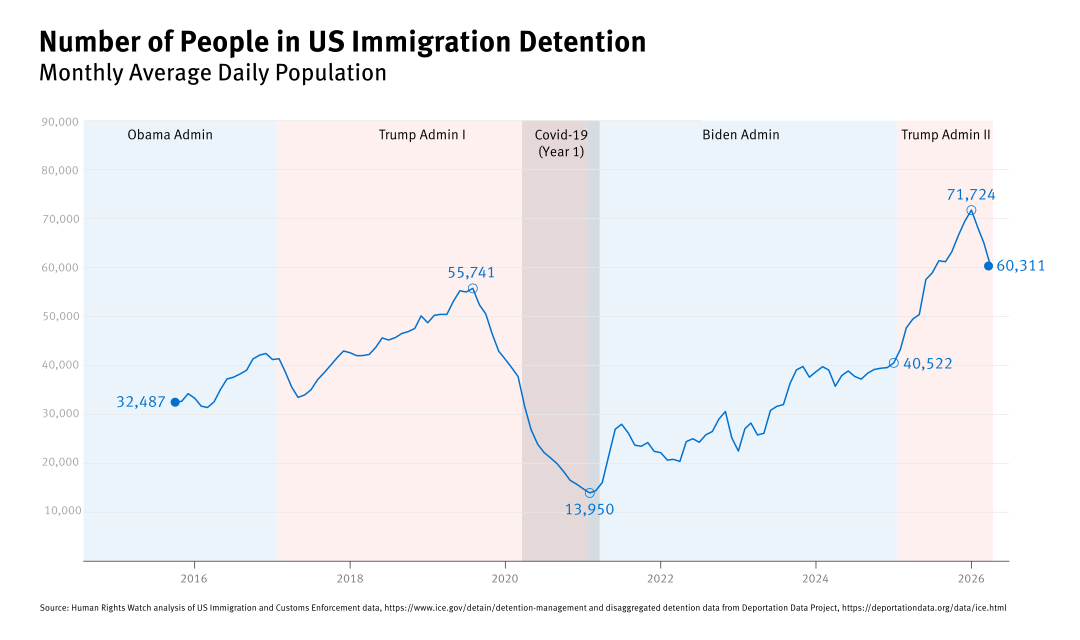
The detained immigrant population has dropped since the January 2026 peak, which was fueled by the enforcement surge in Minnesota.[7]
The Trump administration often claims its immigration detention and removal efforts primarily target people with serious, especially violent, criminal convictions.[8] However, the administration has detained and removed thousands of individuals with no prior US criminal history. In some cases, authorities have seized US citizens.[9] As of April 2026, fewer than 18,000 of over 60,000 people in ICE detention had a previous US criminal conviction, and about 24,000 people in ICE detention had neither a previous conviction nor any pending criminal charges.
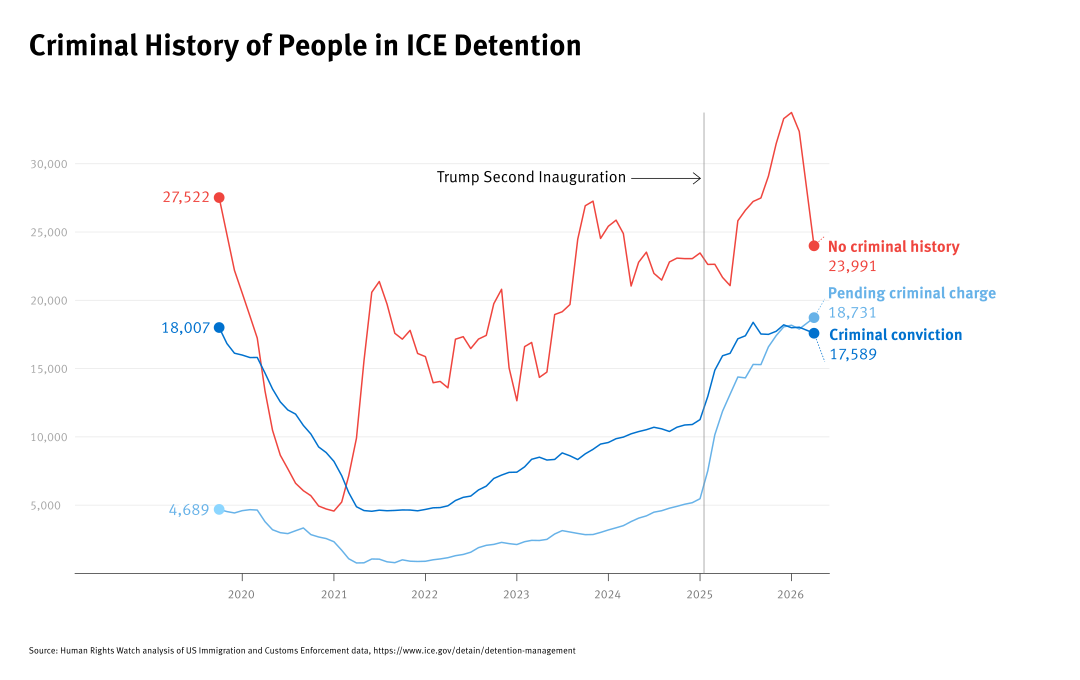
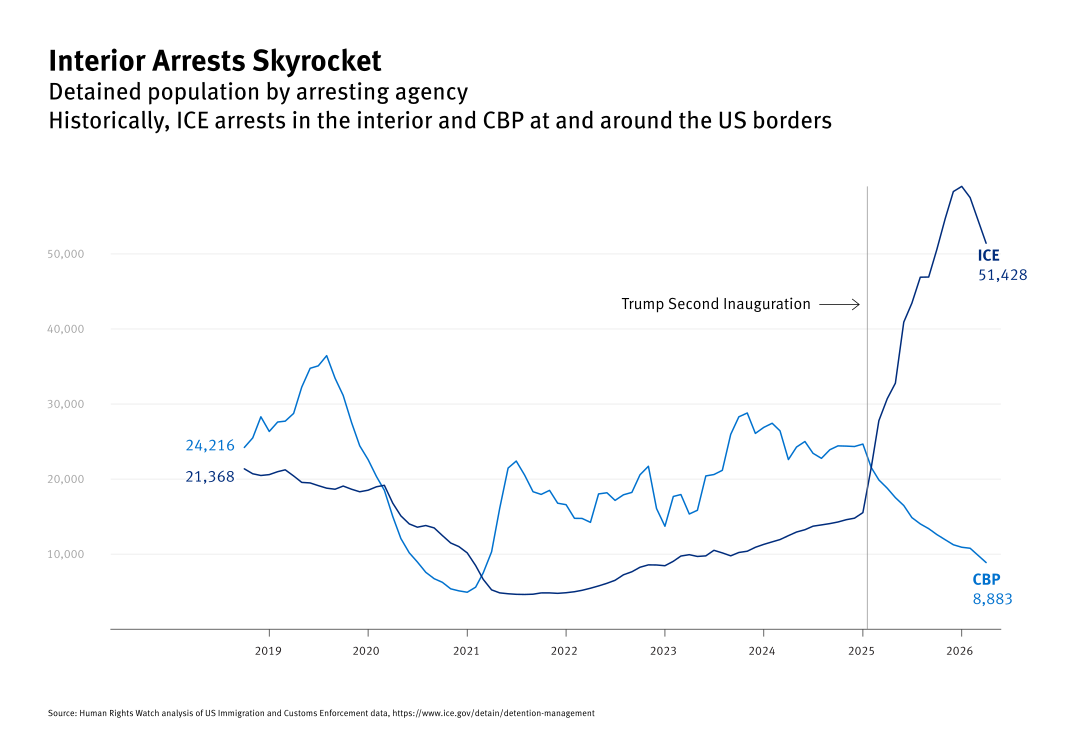
These changes, coupled with the Trump administration’s efforts to urge state and local law enforcement to engage in federal immigration enforcement, and to subject additional people to mandatory detention, have led to a surge in the numbers of people detained, leading to an elevated detained population and exacerbating poor conditions in detention facilities.
During previous years, a high proportion of the people detained by ICE were apprehended at the border by Customs and Border Protection.[10] The current administration has focused on interior enforcement while continuing apprehensions at the border, though fewer people are arriving at the southern border than in previous years.[11]
Rising Mortality Rates
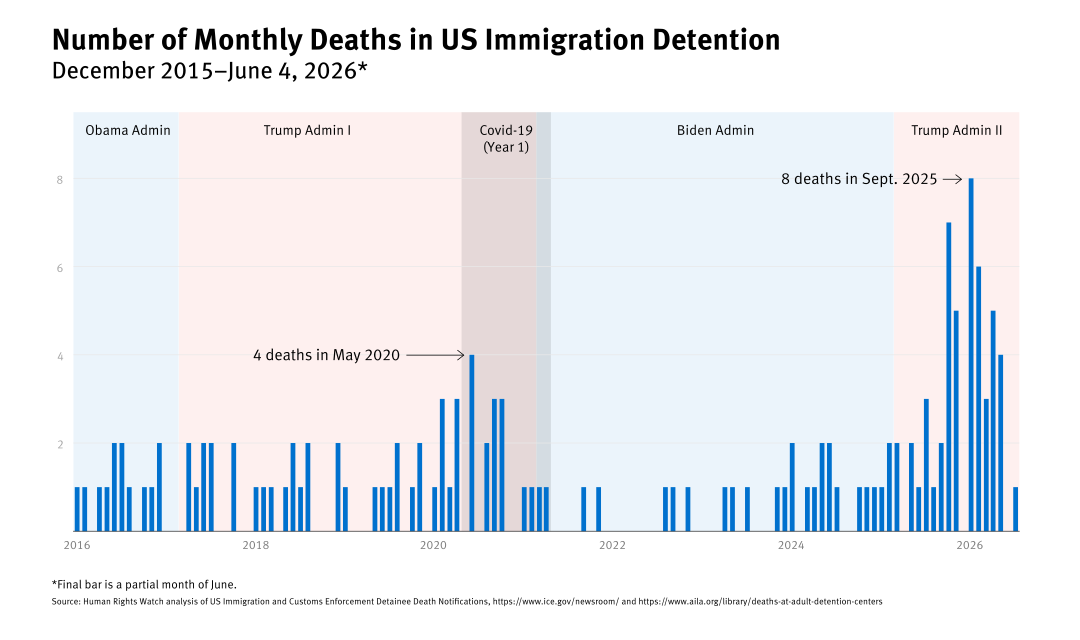
The rate of detainee deaths in ICE custody is now higher than it has been at any time in nearly 20 years.[12] Fifty-two people died in ICE custody from January 20, 2025, to June 4, 2026.
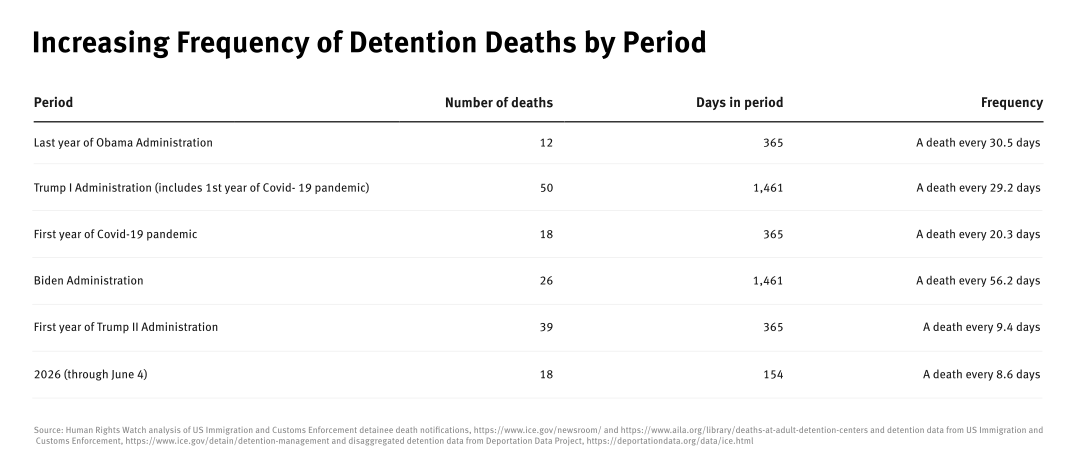
The frequency of deaths has increased substantially. Between 2016 and January 19, 2025, the frequency of detention deaths ranged from one every 20 to 56 days. During the first year of the Covid-19 pandemic, a death occurred every 20 days on average. During the first year of the second Trump administration, that increased to a death every nine days. In the first five months 2026, the rate accelerated.
This record number of annual detainee deaths is not simply a function of increased ICE arrests and detentions: deaths have increased at a rate disproportionate to the growth of the detained population. From January 2025 to January 2026, the detention population increased 77 percent compared with the previous year, while the number of annual deaths more than tripled, resulting in a 138 percent increase in the annualized mortality rate per 10,000 detainees.
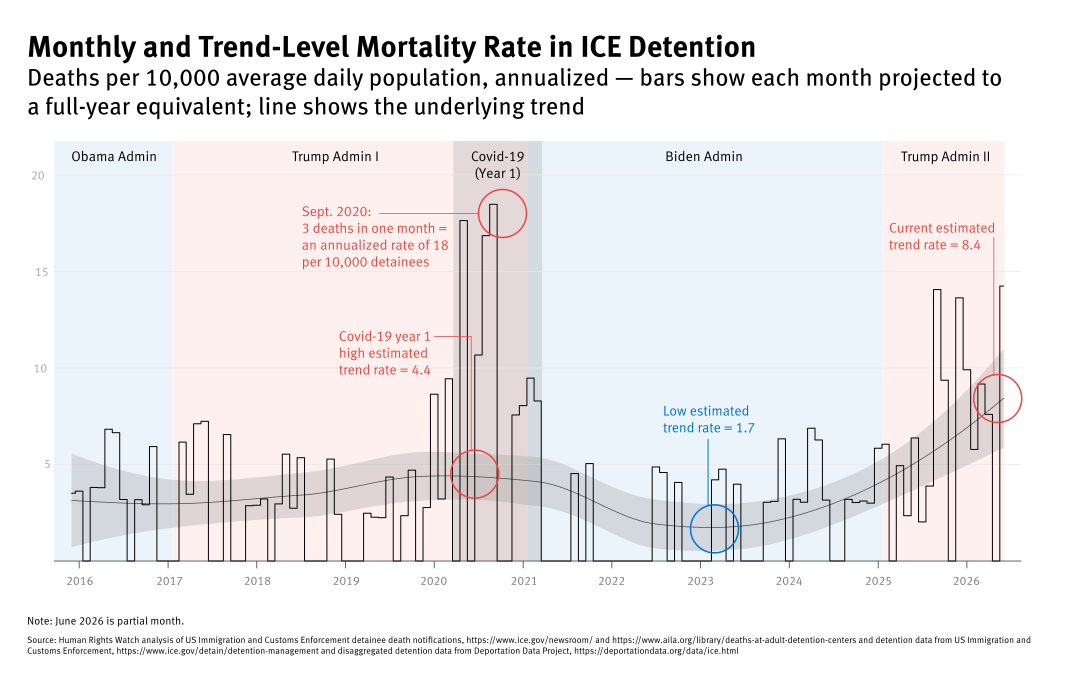
The annualized mortality rate accounts for the size of the detention population and projects the observed pace of deaths to a full-year equivalent, allowing comparisons across periods with different population sizes and time spans. The chart below uses bars to show this rate for each individual month. Individual monthly rates fluctuate considerably. For example, in September 2020, three deaths among an average population of 19,895 produced a monthly mortality rate of 1.5 per 10,000 detainees, which if sustained for a full year would equal 18 deaths for every 10,000 people in detention. But that was a particularly deadly month, and a single month’s rate is insufficient to identify larger trends, including whether conditions are worsening or improving over time. The smoothed line in the figure below filters out month-to-month fluctuations to reveal the underlying trend in death rates over time.[13]
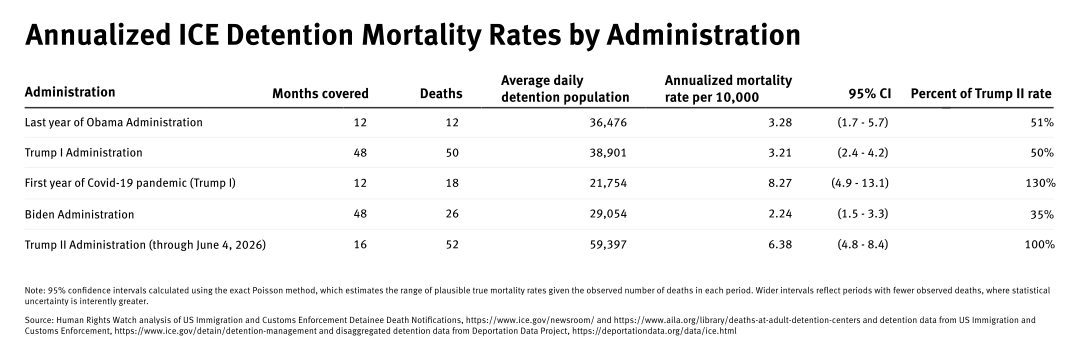
The trend line exposes an extended crisis beyond the worst of the Covid-19 peaks. As of June 2026, the trend-level death rate stands at 8.4 per 10,000 detainees nearly doubles the peak trend-level rate of 4.4 per 10,000 observed during the first year of the Covid-19 pandemic period. The difference is statistically significant: the lower bound of the 95 percent confidence interval around the current estimated death rate (5.9 per 10,000) exceeds the upper bound of the confidence interval at the height of the Covid-19 pandemic (5.6 per 10,000). The non-overlapping confidence intervals confirm that today's sustained death rate is higher than even the worst period of the pandemic. Unlike during the first year of Covid-19, when a small number of acutely deadly months drove an elevated annual average, today's elevated rate reflects a sustained underlying trend rather than isolated spikes.
The mortality rate since Trump returned to office is nearly three times the rate during the entire Biden administration and about twice as high as that of the first Trump administration, which included the first 10 months of the Covid-19 pandemic. The aggregate death rate for the first three months of 2026 reached 8.4 per 10,000, matching the current trend-level rate and briefly exceeding the rate recorded during the first full year of the Covid-19 pandemic (8.3 per 10,000). No deaths were reported in May 2026, bringing the aggregate rate for the first five months of 2026 (through June 4) down to 6.8 per 10,000. The degree to which the month of May pulled down the 2026 rate illustrates why the smoothed trend line, which absorbs such fluctuations, is a more reliable guide to the underlying trajectory than any period rate.
In April 2026, Basu et al. published a research letter in the Journal of the American Medical Association reporting mortality rates among people in ICE detention from fiscal year (FY) 2004 through January 19, 2026.[14] Their findings corroborate those presented here. Despite methodological differences, both analyses independently identify a steep and alarming rise in detention mortality under the second Trump administration. The two studies differ in scope and method (see Appendix IV for details). Basu et al. analyze deaths by fiscal year (October–September) using ICE's officially published annual average daily detained population figures as the denominator. Their analysis draws on a FOIA request release covering FY2004–2017 combined with ICE's public detainee death reporting for subsequent years. Our analysis computes average daily detention populations from disaggregated individual-level detention records obtained through a FOIA request, allowing exact daily counts over any time window rather than scaling annual figures. Our deaths dataset draws on ICE's Detainee Death Notification system and the American Immigration Lawyers Association’s collection of announcements. It includes nine more deaths than Basu et al. for FY2016–FY2020, likely reflecting deaths for which ICE issued a public notification but no formal Detainee Death Report. Our data extends through June 4, 2026, but does not cover the pre-2015 period included in Basu et al. Mortality rates in this report are expressed per 10,000 detained people to make rates more interpretable in the context of actual detention population sizes—with a detention population of roughly 60,000, a rate of 6 per 10,000 means approximately 36 people would be expected to die in a given year. Rates can be converted to the per 100,000 person-years used by Basu et al. by multiplying by 10. Despite these differences, the two studies produce near-identical mortality rates for overlapping periods.[15] Where our analysis extends beyond Basu et al. is in granularity, method, and recency. We provide facility-level mortality analysis, examine facility-level population sizes in the two weeks preceding each death, and apply LOESS smoothing to monthly mortality rates to characterize the underlying trend trajectory—revealing that the rate continues to rise rather than stabilize. We also analyze trends through June 4, 2026, and combine statistical findings with medical review of individual cases and family interviews—none of which are possible using the aggregate public data sources available to Basu et al. |
Deaths
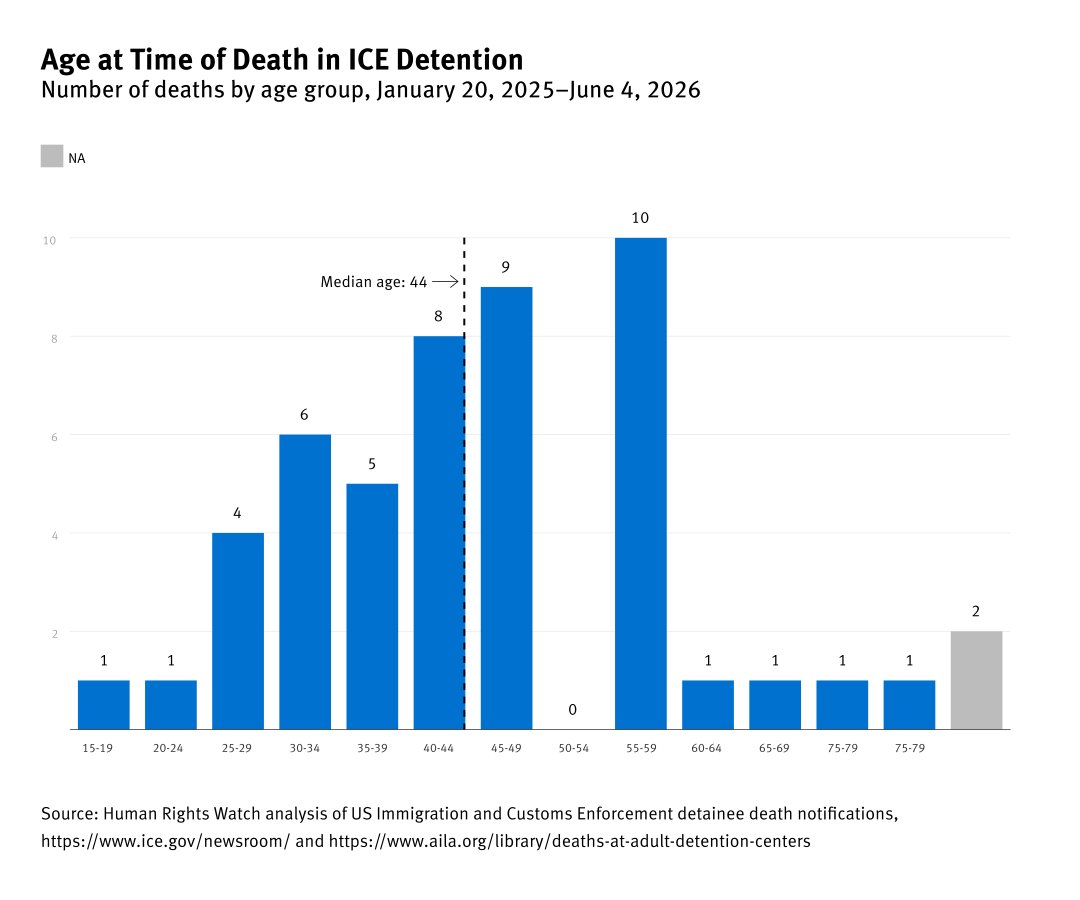
For all 52 deaths since Trump regained office, age at time of death ranged from 19 to 75 years old (median 44 years); 51 were male and 1 was female.
Among the 39 people who died during the primary study period, the number of days held in ICE custody prior to death ranged from 1 to 559 (with an average of 69.5 days and a median of 28 days). Fourteen deaths (36 percent) occurred less than two weeks after entering ICE custody, including 12 deaths that occurred within less than a week in ICE custody (two of these deaths occurred during apprehension).
Those who died represented 20 different nationalities (10 from Mexico, 5 from Honduras, 3 from China, 2 each from Cuba, Haiti, Nicaragua, and Vietnam, and 1 each from Bulgaria, Cambodia, Canada, Colombia, Dominican Republic, El Salvador, Eritrea, Ethiopia, Guatemala, Jordan, Pakistan, the Philippines, and Ukraine).
Deaths occurred while in the custody of 26 different detention facilities in 12 states (including Puerto Rico). The individuals who died were detained in various types of ICE detention centers including privately-run detention centers (27), county-run jails (4), Federal Bureau of Prisons centers (3), and an ICE field office (2).
Twenty-six deaths (66.7 percent) occurred in hospitals, eleven deaths (28.2 percent) occurred in the detention facility, and two deaths (5.1 percent) occurred elsewhere. Many of those who died at outside hospitals died within one week of arrival at the hospital.
As of May 15, 2026—when our analysis of the first year of the Trump administration was completed—DDRs were available for all 39 individuals. However, several of these reports were posted outside the regular 30-day reporting window, per the 2025 ICE Detainee Death Reporting Directive, with one case not having its DDR posted until February 2026, a full year after the individual died.[16]
Additionally, per the directive, ICE should publish a notice to their newsroom page via a DDN within 48 hours of a death. However, Human Rights Watch and Physicians for Human Rights found that 64 percent of death notifications were published after that window, with one published as late as 11 days later.
Causes of medically categorized deaths included “natural causes,” stroke, complications of chronic disease such as heart disease, kidney and liver disease, diabetes, and alcohol use. Seven deaths were apparent suicide. Five deaths were categorized as “other,” all of which were traumatic causes of death, including one that has been categorized on autopsy as a homicide caused by neck and torso compression, two that were fatalities after a sniper attack by a private individual against a detention center, one of an individual who ran into traffic while being pursued for arrest by ICE, and one who was fatally shot by an ICE officer during an arrest.
Increased Detention Populations
Between January 2025 and January 2026, the overall ICE detention population increased by 77 percent from around 40,000 to over 71,000 people. It decreased to 64,000 as of the beginning of April 2026. ICE is now placing detainees in at least 100 facilities that were not in use during the year prior to Inauguration Day in January 2025, including five facilities with average daily populations of over 1,000 people, such as Camp East Montana at Fort Bliss. Yet even with this expansion in capacity, ICE detention facilities are much more crowded than in prior years.
There is no publicly available database that provides the maximum physical capacity of each ICE detention facility, and publicly released data on contractual capacity—the number of beds each facility has contracted with ICE to provide—is only available for 85 facilities, less than 13 percent of the facilities that held people during 2025.[17] In the absence of comprehensive capacity data, this report compares facility populations to their historical averages as a measure of crowding conditions.
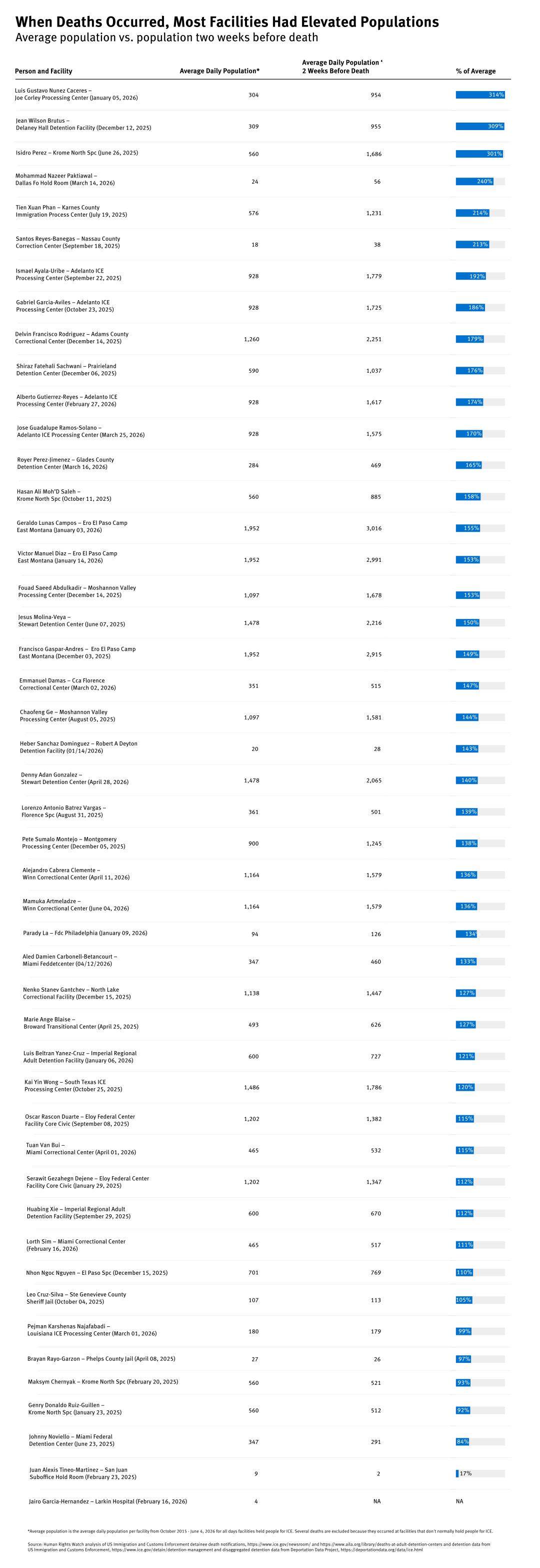
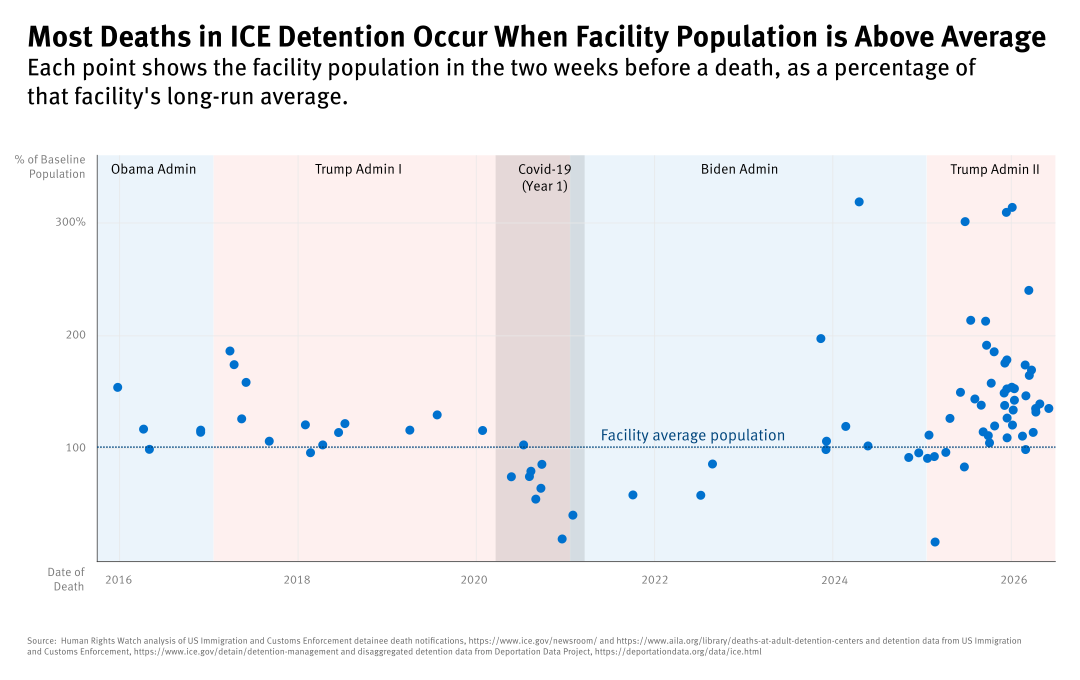
Deaths in the last year have mostly occurred in facilities where detention populations were much higher than in previous years. For each death in an ICE detention facility between January 2025 and June 4, 2026, Human Rights Watch compared the average daily population in the two weeks prior to death to the average daily population for all days in which the facility had held ICE detainees since October 2015.[18] The detention populations in the two weeks preceding the death were consistently much higher than the roughly 10-year averages—at the typical facility where a death occurred, there were about 242 more detainees than usual in the two weeks prior to death.
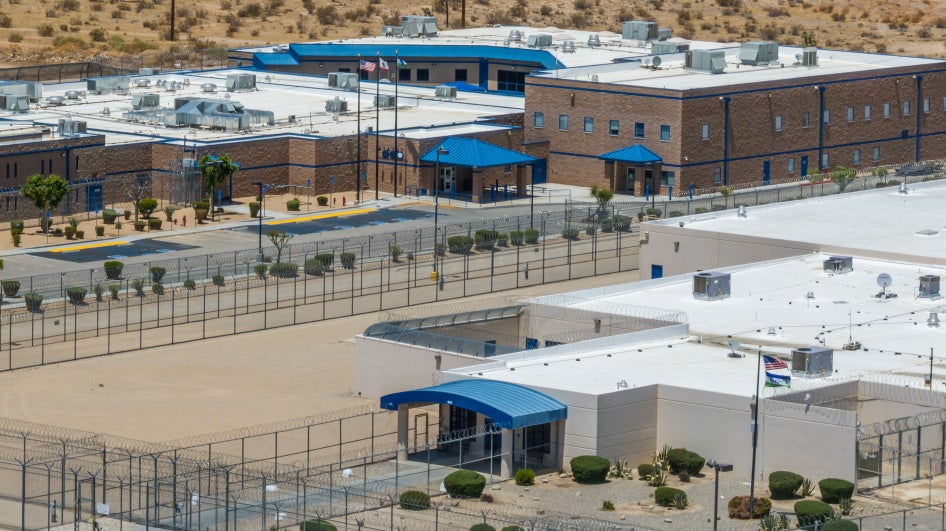
For example, Isidro Perez, 75, was held for two weeks at Krome North Service Processing Center, which, during that period, had a daily population of about 1,685 people—a figure 302 percent of its average since October 2015. He was then admitted to a hospital for a week, discharged back to the medical housing unit within Krome, before eventually being transferred to an emergency room where he died. In another example, Ismael Ayala Uribe was reported to present with normal vital signs and was cleared for placement by facility staff in the general population in Adelanto Processing Center nearly a month before he suffered cardiac arrest and died on September 22, 2025. During that time, Adelanto was at nearly double, or 192 percent of, its normal post-October 2015 population. According to ICE reporting, between the start of Trump’s second term and March 25, 2026, four people detained at the Adelanto Processing Center, later transferred to Victor Valley Global Medical Center, died in custody.
It is impossible to attribute any causal relationship between detention population size and specific deaths. Without significant improvements, however, the substandard medical care that Human Rights Watch and Physicians for Human Rights have repeatedly documented in ICE detention facilities over years of research can only be stretched thinner when facilities are above average population.
Facilities With Disproportionately High Numbers of Deaths
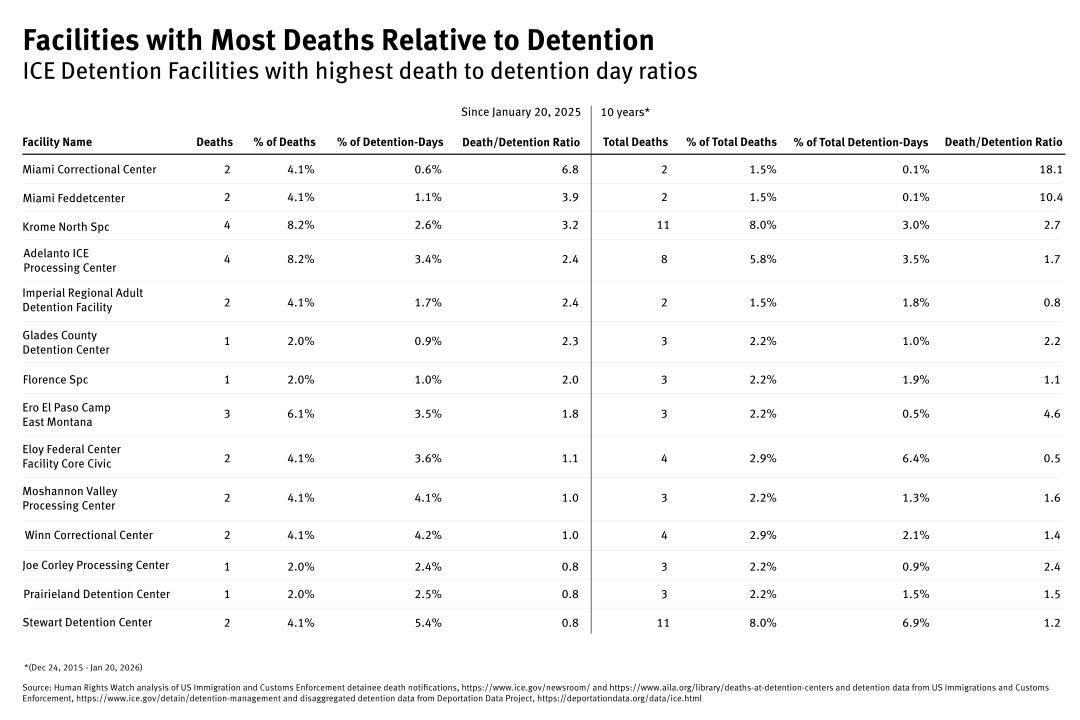
In recent years, a high number of deaths have occurred in specific detention facilities and not simply because these facilities hold the largest number of detainees. For both the January 2025 to April 2026 period and the previous 10-year period, Human Rights Watch compared the proportion of system-wide detention days[19] for each facility to the proportion of deaths that occurred in each facility. In several facilities, there have been a disproportionate number of deaths given the total detention days.
For example, over the past 10 years, about 8 percent of all detention deaths nationwide were of detainees held at Krome, and yet the facility accounted for only 3 percent of all detention days nationwide since December 24, 2015. The ERO Camp East Montana facility in El Paso began holding detainees in August 2025. There were three deaths there between its opening and June 4, 2026, representing 6.1 percent of all deaths since January 20, 2025, which is almost double the proportion of detention days the facility has been responsible for during that time.
II. Analysis of Deaths in ICE Custody, January 20, 2025-January 19, 2026
This report’s analysis of the 39 deaths in ICE custody from January 20, 2025 to January 19, 2026 included expert medical reviews of the Detainee Death Notifications (DDNs) and Detainee Death Reports (DDRs) published by ICE, supplemental medical records in two cases, reviews of media and other public reports, and in some cases, interviews with lawyers, family members, and witnesses.[20] The analysis revealed the limited and delayed information shared by ICE about the deaths, in violation of the agency’s own reporting requirements. The information that is available, however, raises serious concerns about the nature of the deaths and the care provided in many of the cases, and illustrates systemic problems that likely contributed to the dramatic escalation in detention deaths since the start of the current Trump administration.
Deaths in Detention During the First Year of Trump’s Second Term
Name | Age | Sex | Nationality | Date of Death | Days in custody before death
| Detention Center of custodial record | Place of Death
| State
| Suspected cause of death per PHR Medical Review
|
Genry Donaldo Ruiz-Guillen | 29 | Male | Honduras | 1/23/2025 | 87 | Krome North Service Processing Center | Larkin Hospital Palm Springs | Florida | Unsuccessful cardiopulmonary resuscitation in the setting of hyperosmolarity, hypernatremia, and rhabdomyolysis of unclear etiology |
Serawit Gezahegn Dejene | 45 | Male | Ethiopia | 1/29/2025 | 162 | Eloy Detention Center | Banner University Medical Center Phoenix | Arizona | Removal of life-sustaining therapies per family wishes after complications from multiple infections in the setting of HIV and likely AIDS |
Maksym Chernyak | 44 | Male | Ukraine | 2/20/2025 | 19 | Krome North Service Processing Center | HCA Kendall Hospital | Florida | Hemorrhagic stroke leading to brain death |
Juan Alexis Tineo-Martinez | 44 | Male | Dominican Republic | 2/23/2025 | 3 | Not stated | Centro Medico Hospital | Puerto Rico | Unknown |
Brayan Rayo-Garzon | 27 | Male | Colombia | 4/8/2025 | 15 | Phelps County Jail | Mercy South Hospital | Missouri | Suspected suicide by hanging although he also had symptomatic acute respiratory failure 2/2 COVID +/- TB |
Nhon Ngoc Nguyen | 55 | Male | Vietnam | 4/16/2025 | 52 | El Paso Service Processing Center | Long Term Acute Care Hospital | Texas | End-stage dementia and acute-on-chronic respiratory failure (had a Do Not Resuscitate order in place) |
Marie Ange Blaise | 44 | Female | Haiti | 4/25/2025 | 71 | Broward Transitional Center | Broward Transitional Center | Florida | Cardiopulmonary arrest of unclear etiology |
Abelardo Avelleneda-Delgado | 68 | Male | Mexico | 5/5/2025 | 1 | Lowndes County Jail | In transit from Lowndes County Jail en route to Stewart Detention Center | Georgia | Unknown |
Jesus Molina-Veya | 45 | Male | Mexico | 6/7/2025 | 24 | Stewart Detention Center | Phoebe Sumter Medical Center Americus | Georgia | Suicide by hanging |
Johnny Noviello | 49 | Male | Canada | 6/23/2025 | 40 | Federal Detention Center, Miami | Federal Detention Center, Miami | Florida | Cardiopulmonary arrest of unclear etiology |
Isidro Perez | 75 | Male | Cuba | 6/26/2025 | 21 | Krome North Service Processing Center | HCA Kendall Hospital | Florida | Suspected acute myocardial infarction (heart attack) |
Tien Xuan Phan | 55 | Male | Vietnam | 7/19/2025 | 48 | Karnes County ICE Processing Center | Methodist Hospital Northeast | Texas | Suspected hemorrhagic stroke secondary to uncontrolled hypertension and diabetes mellitus |
Chaofeng Ge | 32 | Male | China | 8/5/2025 | 6 | Moshannon Valley ICE Processing Center | Moshannon Valley ICE Processing Center | Pennsylvania | Suicide by hanging |
Lorenzo Antonio Batrez Vargas | 32 | Male | Mexico | 8/31/2025 | 30 | Central Arizona Florence Correctional Complex | Central Arizona Florence Correctional Center | Arizona | Suspected acute respiratory failure secondary to COVID pneumonia and complicated by immunocompromised state of uncontrolled diabetes mellitus |
Oscar Rascon Duarte | 58 | Male | Mexico | 9/8/2025 | 246 | Eloy Detention Center | Banner Desert Hospital | Arizona | Respiratory failure secondary to end-stage Alzheimer’s disease and multiple underlying comorbidities |
Silverio Villegas Gonzalez | 38 | Male | Mexico | 9/12/2025 | 1 | Non-Detention-Related - Killed in Field | Loyola University Medical Center | Chicago | Fatal gunshot by ICE officer while individual was evading arrest |
Santos Banegas Reyes | 42 | Male | Honduras | 9/18/2025 | 2 | Nassau County Correctional Center | Nassau County Correctional Center | New York | Suspected acute alcohol withdrawal |
Ismael Ayala-Uribe | 39 | Male | Mexico | 9/22/2025 | 37 | Adelanto Detention Facility | Victor Valley Global Medical Center | California | Suspected septic shock resulting in cardiorespiratory arrest and unsuccessful resuscitation |
Norlan Guzman-Fuentes | 37 | Male | El Salvador | 9/24/2025 | 1 | ICE Dallas ERO Field Office | ICE Dallas ERO Field Office | Texas | Fatal injuries after sniper attack |
Huabing Xie | 53 | Male | China | 9/29/2025 | 17 | Imperial Regional Detention Facility | El Centro Regional Medical Center | California | Suspected acute myocardial infarction and/or stroke |
Miguel Angel Garcia-Hernandez | 31 | Male | Mexico | 9/30/2025 | 7 | ICE Dallas ERO Field Office | Parkland Health Hospital | Texas | Fatal injuries after sniper attack |
Leo Cruz-Silva | 34 | Male | Mexico | 10/4/2025 | 4 | Ste. Genevieve County Jail | Ste. Genevieve County Jail | Missouri | Suicide by hanging |
Hasan Ali Moh'D Saleh | 67 | Male | Jordan | 10/11/2025 | 28 | Krome North Service Processing Center | Larkin Community Hospital | Florida | Cardiac arrest and failed resuscitation in the setting of a central-line associated bloodstream infection and resultant septic shock |
Gabriel Garcia-Aviles | 54 | Male | Mexico | 10/23/2025 | 10 | Adelanto Detention Facility | Victor Valley Global Medical Center | California | Cardiac arrest in the setting of alcohol withdrawal |
Jose Castro-Rivera | 24 | Male | Honduras | 10/23/2025 | 1 | Non-Detention-Related - Killed in Field | Non-Detention-Related - Killed in Field | Virginia | Fatally struck by a vehicle during arrest |
Kai Yin Wong | 63 | Male | China | 10/25/2025 | 559 | South Texas ICE Processing Center | Methodist Metropolitan Hospital | Texas | Withdrawal of life-sustaining therapies after complications from a heart valve surgery |
Francisco Gaspar Andres | 48 | Male | Guatemala | 12/3/2025 | 94 | Camp East Montana | The Hospitals of Providence East | Texas | End-stage liver and renal failure secondary to chronic alcohol dependence |
Pete Sumalo Montejo | 72 | Male | Philippines | 12/5/2025 | 284 | Montgomery ICE Processing Center | Valley Baptist Medical Center | Texas | Cardiac arrest in the setting of multiple chronic comorbidities but also mentioned is “complications of severe burns,” the timing and contribution of which are unclear |
Shiraz Fatehali Sachwani | 48 | Male | Pakistan | 12/6/2025 | 162 | Prairieland Detention Center | Mansfield Methodist Hospital | Texas | Withdrawal of life-sustaining therapies after complications from pneumonia and sepsis |
Jean Wilson Brutus | 41 | Male | Haiti | 12/12/2025 | 2 | Delaney Hall Detention Facility | University Hospital | New Jersey | Failed resuscitation of unclear etiology |
Fouad Saeed Abdulkadir | 46 | Male | Eritrea | 12/14/2025 | 216 | Moshannon Valley ICE Processing Center | Moshannon Valley ICE Processing Center | Pennsylvania | Respiratory failure of unknown etiology progressing to cardiac arrest and failed resuscitation |
Delvin Francisco Rodriguez | 39 | Male | Nicaragua | 12/14/2025 | 81 | Adams County Detention Center | Merit Health Natchez | Mississippi | Attempted suicide by hanging leading to severe anoxic brain injury and removal of life sustaining therapies |
Nenko Stanev Gantchev | 56 | Male | Bulgaria | 12/15/2025 | 84 | North Lake Processing Center | North Lake Processing Center | Michigan | Unknown (found unresponsive in cell and died after 30 min of attempted resuscitation) |
Geraldo Lunas Campos | 55 | Male | Cuba | 1/3/2026 | 174 | Camp East Montana | Camp East Montana | Texas | Asphyxia due to neck and torso compression from use-of-force by ICE staff |
Luis Gustavo Nunez Caceres | 42 | Male | Honduras | 1/5/2026 | 50 | Joe Corley ICE Processing Center | HCA Houston Healthcare/Conroe Regional Medical Center | Texas | End-stage congestive heart failure |
Luis Beltran Yanez–Cruz | 68 | Male | Honduras | 1/6/2026 | 52 | Imperial Regional Detention Facility | John F. Kennedy Memorial Hospital | California | Congestive heart failure, myocardial infarction |
Parady La | 46 | Male | Cambodia | 1/9/2026 | 4 | Federal Detention Center, Philadelphia | Thomas Jefferson University Hospital | Pennsylvania | Brain death secondary to anoxic brain injury suffered during cardiac arrest of unclear etiology |
Victor Manuel Diaz | 36 | Male | Nicaragua | 1/14/2026 | 9 | Camp East Montana | Camp East Montana | Texas | Suicide by hanging |
Heber Sanchez Domínguez | 34 | Male | Mexico | 1/14/2026 | 6 | Robert A Deyton Detention Facility | Piedmont Henry Medical Center | Georgia | Suicide by hanging |
Detainee Death Reports: Scarce but Alarming Details
Medical experts analyzed the medical information available about each death during the first year of Trump's second term and found the most notable fact to be the dearth of information publicly available from ICE. Many cases only had a Detainee Death Notification (DDN) until many Detainee Death Reports (DDRs) were belatedly released in February 2026. DDN alerts typically, but not always, contain the name, age, nationality, and location of death of each person. They typically provide some information on how the detained person arrived in the United States, what their immigration status was at the time of death, and reason for detention. Little information is provided regarding the circumstances or health conditions prior to death.
DDRs provided additional information but often lacked specificity. For example, while it was common for reports to note an assessment that an individual had “elevated blood pressure,” they never provided exact values of the blood pressure measurements to allow for interpretation of their potential clinical significance. There is much greater risk of complications if there is a failure to treat a blood pressure of 180/100 mm Hg than one of 140/80 mm Hg. Furthermore, reports did not consistently specify whether an individual had requested a medical visit or visits, and if so, how many; whether requested medical visits had occurred; and what, if any, clinical assessments had been performed or specific medical treatment offered. There was a significant lack of clarity on the details of recorded medical emergencies and resuscitations that occurred preceding each death as described in the DDNs, DDRs and, in two cases, through review of supplemental medical records. Past analyses of ICE custody deaths have relied upon DDNs, DDRs, longer and more complete Detainee Death Reviews, and in some cases, supplemental ICE medical records, autopsies, and medical records from hospitals that cared for individuals while in ICE custody.
In the 11 deaths that occurred at the detention facilities, 8 individuals were found unresponsive, all of whom were pronounced dead after resuscitation was attempted. Eight of the 11 individuals had known chronic diseases per ICE’s medical intake reporting in the DDR.
All seven deaths that occurred by apparent suicide at the detention facilities involved individuals found unresponsive with a ligature or cloth around their necks. DDRs for six of these individuals indicate they denied suicidal ideation during initial medical intake screenings, although one of those was noted on intake to have a disheveled appearance, depressed mood, and flat affect, features concerning for someone with mental illness in need of close follow-up and care. One report does not specify whether such a screening occurred at all, but for that individual (Leo Cruz-Silva), his first reported interaction with a medical professional (an Llicensed Practicing Nurse, or LPN) occurred because there was concern by another inmate that Cruz-Silva was acting strangely; information from ERO Chicago stated that Cruz-Silva had showed signs of paranoia and hallucinations during processing. The supervisory LPN alerted ERO Chicago that he was having a mental health crisis, but nothing came of that, and the next day, he was found under his bed, hallucinating, and a “higher-level provider” ordered the LPN to give an anti-psychotic with plans to evaluate him in a week. The next day he was found hanging in his cell.
Overall, 25 of the 39 deceased had pre-existing chronic medical and mental health conditions documented by ICE upon medical intake and disclosed in their DDN and/or DDR. In some cases, a person’s medical and mental health conditions were seemingly only identified later during their detention, with the DDR stating that an individual reported having no medical or mental health conditions upon intake. In other cases, there was no mention of screening for pre-existing chronic conditions one way or another upon intake. Discrepancies—when individuals reportedly stated they had no pre-existing diseases upon intake but were found to have significant disease soon thereafter—were not explored in the DDRs. Potential reasons for these discrepancies include language barriers, embarrassment or fear of disclosing chronic conditions in front of one’s peers (as “batch medical screenings”[21] have been reported by health professionals in detention centers), misunderstanding of the screening questions, or lack of knowledge of one’s medical history.
Common medical and mental health conditions among detained persons included chronic kidney disease, coronary artery disease, diabetes, substance use disorder, hypertension, liver failure, and seizure conditions. Less common but also present in some individuals were Alzheimer’s disease, cancer, anxiety, and infectious diseases such as hepatitis C and tuberculosis.
When the provider type was noted, initial medical intake into ICE custody was performed almost exclusively by LPNs, who are trained to provide only basic nursing care. Sometimes a Registered Nurse (RN) would perform medical intake; rarely would an advanced practice provider (APP)—often used as a catch-all phrase that includes provider types such as nurse practitioners and physician assistants—see an individual upon intake. Most direct care of patients during sick visits or during medical emergencies was performed by RNs (when a specific provider type was noted at all).
In the ICE DDNs and DDRs we reviewed, the types of clinicians mentioned most frequently (if mentioned at all) included non-specific “medical staff,” “providers,” “nurses,” as well as LPNs, RNs, and APPs. In the instances physicians were mentioned, it was in the context of “ordering” something for the detained patient, but it was not clear that the physician ever assessed the patient in person or if these were verbal/phone orders. This was also true with the mention of APPs, who were sometimes noted as having seen patients directly but also at times noted as having given orders to the RN who was seeing the patient. Given the unclear description of the staff present at many of the medical emergencies described leading up to these deaths, it is not possible to know what level of medical staffing was available and present to assist in these emergencies. Often when it was described, the only individual mentioned was an RN.
The expert medical analysis conducted by Physicians for Human Rights found that the highly limited nature of the data available in the DDNs and DDRs translated into an inability to categorize deaths as preventable[22] or “detention-attributable.”[23]
A non-exhaustive list of examples of circumstances and clinical details that raised concerns that a death may have been preventable, however, include the following:
- All deaths that resulted from suicide;
- Individuals with known hypertension and documentation of worsening symptoms (headaches and dizziness) who did not receive more frequent clinical evaluations and/or earlier referrals to facilities outside the detention center;
- A diagnosis of disseminated tuberculosis in an individual with severe symptoms whose tuberculosis screening was negative upon intake, had “labored breathing” noted upon intake, but for whom no further assessment was then conducted;
- Individuals reported to have refused to take chronic disease medications (unclear if interpreter services were needed/used and/or what attempts were made by medical staff to understand why the person did not want to take the medications);
- Individuals who died from sepsis and had known risk factors for sepsis (for example, indwelling central venous catheters) but no blood cultures drawn or antibiotics given when the patient presented with a fever;
- Delays in the time from when a person was found unresponsive to when cardiopulmonary resuscitation (CPR) was reportedly started;
- Worsening respiratory symptoms and shortness of breath without intervention until the person was found unresponsive;
- A patient who was seen by a nurse for a medical emergency, documented to be complaining of severe pain near anus and with “abnormal vital signs,” was ordered “pain medications, anti-inflammatory ointment, a fiber supplement, and wellness checks for ten days,” with no physical exam at all documented to have been performed, was found in critical condition three days later, and was found in hospital to have a large infected abscess on buttock.[24]
A careful analysis of in-custody deaths to assess quality of health care received and to assess for possible preventability is critically important to understand how to improve health care and the systems in which these deaths occur. To facilitate such review, ICE should, at a minimum, publicly release more complete and comprehensive Detainee Death Reviews and autopsies in a timely fashion.
A non-exhaustive list of concerns and questions that arose during expert medical review of the publicly available DDNs and DDRs can be found in Appendix I.
Case Studies
Following are details of four case studies, among the 39 deaths that occurred during the first year of the current Trump administration, which highlight concerns about the medical care provided to detainees during their detention and about the limited information made public or shared with families about the deaths. The first two cases include analysis by Physicians for Human Rights’ medical experts, based on the publicly available ICE Detainee Death Notifications (DDNs), Detainee Death Reports (DDRs), and supplementary medical records including autopsy reports and outside hospital medical records as obtained by Human Rights Watch from the deceased individuals’ families and used for this analysis with their consent. The additional records that Physicians for Human Rights was able to access for these cases allowed for more detailed analysis and conclusions about the concerning nature of these cases. The final two cases include details that Human Rights Watch researchers drew from DDNs, DDRs, media reports, and interviews with lawyers, relatives of the deceased, or other witnesses.
Maksym Chernyak: Death from Hemorrhagic Stroke

Maksym Chernyak, 44, died after detention staff failed to recognize and respond appropriately to a clear life-threatening medical emergency, a failure that almost certainly cost him his life. ICE documentation and other medical records indicate that on the morning of his death, more than four and a half hours passed between an initial emergency call to detention facility staff and Chernyak’s eventual arrival at an emergency room.
Chernyak arrived in the United States from Ukraine in August 2024, under the United For Ukraine[25] humanitarian parole program. He and his wife, Oksana Tarasiuk, settled in Florida, where he obtained work authorization and a Social Security number. Tarasiuk said their life changed abruptly on January 26, 2025, after a domestic argument led a neighbor to call the police.[26] Police arrested Chernyak, who was unable to communicate in English, and handed him over to ICE, who transferred him to the Krome North Service Processing Center in Florida on February 2, 2025. He died 18 days later.
Review of his publicly available DDN and DDR describe him presenting to medical care three times, once for intake on February 3 and then for cold symptoms on February 9 and 15. He was noted each time to have “normal vital signs except for a slightly elevated blood pressure.”
Two-and-a-half days after Chernyak’s last reported visit to the ICE medical clinic, according to internal documentation by a nurse practitioner (NP) at Krome, the NP received a call that a medical emergency was declared on Chernyak’s behalf at midnight on February 18, presumably by facility staff, due to “vomiting and suspected ingestion of a substance.” The NP’s documentation indicates that an RN reportedly responded and recorded normal vital signs, but an order was given to send Chernyak to the emergency room for further evaluation. However, additional documentation by the same RN indicates that a medical emergency on behalf of Chernyak was called at 2:32 a.m. for “seizure-like” activity. It is unclear what transpired between midnight and 2:32 a.m.
The RN reported that Chernyak was unresponsive when she responded to the emergency call at 2:32 a.m. Among his many other concerning symptoms were “dilated equal but nonreactive pupils” which a trained medical provider would recognize as a medical emergency with the potential for impending respiratory failure. Rather than 911 being called for emergency transport, Chernyak was transported to ICE’s medical clinic, where his vital signs were reportedly “normal,” while an electrocardiogram was described as “abnormal.” An advanced practice provider (APP) then ordered his transport to a local emergency room via “non-emergency, medical transport.” Thirty minutes after his initial emergent presentation, and while still waiting for the non-emergency transportation to the emergency room, he started having additional seizures, vomited, and his pupils became unequal and remained non-reactive. The RN and Krome medical staff called 911.
In PHR’s assessment, the non-recognition of the significance of his pupillary findings, the APP’s recommendation of non-emergency transport, and the delay in calling 911 represent mismanagement of a clear life-threatening medical emergency. The DDR reports that the local hospital found Chernyak to have had a “possible hemorrhagic stroke,” but that, despite appropriate medical treatment once at the hospital, he ultimately met brain death criteria and was pronounced dead on February 20.
Interviews with Chernyak’s wife, lawyer, and cellmate add more to the story. For days before the medical emergency, he endured harsh conditions—cold cells, thin mats, poor food, and no translation support while being pressured to sign documents he did not understand, his wife told researchers.[27] His wife said he was under severe psychological stress. Soon after being detained, Chernyak developed a fever, chest pain, and high blood pressure, but told his wife that he did not receive any medications for hypertension or evaluation for chest pain. He instead only received basic painkillers and antihistamines despite repeated pleas for care, according to his wife and lawyer.[28] On February 17, he reported an irregular heartbeat and blood in his stool to Krome staff and asked to see a doctor.[29] The next day, he collapsed in his cell, vomiting and defecating on himself as detainees screamed for help, according to his cellmate.[30] Staff delayed responding and accused him of drug use, though his cellmate told Human Rights Watch that he had not taken any drugs.
Review of additional medical records, including Chernyak’s records while detained at Krome and his medical records at the receiving hospital, which are far more detailed than ICE's public reporting and which Human Rights Watch and Physicians for Human Rights were able to review only because his family shared them with their consent, reveal multiple areas of concern regarding his care while detained. ICE medical records show that Chernyak had elevated blood pressure—systolic blood pressure into the 140s—each time he presented to the clinic with cold symptoms yet there was no documentation of any anti-hypertensive medication being prescribed for the elevated blood pressures. This evidence of uncontrolled blood pressure should have added a hypertensive emergency to the differential diagnosis when he ultimately presented with stroke-like symptoms. Moreover, uncontrolled hypertension is a significant risk factor for hemorrhagic stroke. The RN who responded to his medical emergency noted in her initial assessment that Chernyak’s pupils were non-reactive, while he was overall non-responsive, flaccid, and vomiting, yet did not act on this clear sign of life-threatening emergency. The records further reveal that the Nurse Practitioner (NP) involved in his medical decision-making was not on site but received information about Chernyak via telephone and guided the RN verbally.
Additionally, according to Chernyak’s patient medical records issued by ICE, on the day of his emergency that prompted transfer to the hospital, a medical recording by the RN who was caring for him noted “seizure activity occurring in 3-5 min intervals with 15-20 seconds duration each. Approximately five of these instances occurred from 03:20-03:45 [a.m.].” It was after this time that the RN called 911 per her medical charting. By this time, Chernyak was also displaying dystonic posturing – back arching that occurs as the brainstem continues to herniate downward through the skull. Vital signs were continually noted as “within normal limits,” although his electrocardiogram reported sinus bradycardia with a heart rate of 45 beats per minute (bpm), in contrast to the normal range of 60-100 bpm, with multiple other findings concerning for a myocardial infarction, or heart attack. Additionally, the documented vital signs by the RN in his chart were far from normal, with a dangerously elevated blood pressure of 168/99, a very low heart rate of 54, and an oxygen saturation of 84 percent.
Communication reviewed by Human Rights Watch and Physicians for Human Rights between the RN, the NP, and Emergency Medical Services (EMS) reveals that the ICE medical team’s working diagnosis was intoxication. Review of his hospital records shows that Chernyak did not arrive at the emergency room until 4:43 a.m., despite a reported initial emergency call to a NP at midnight, an emergency call to an RN at 2:32, and Chernyak displaying “seizure-like” activity from 3-3:45 a.m. at ICE’s medical clinic. Given his clearly concerning status and presentation, emergency room staff immediately ordered CT imaging, which showed a large hemorrhagic stroke. His blood pressure was noted to have “systolics more than 280 and diastolics more than 120.” These blood pressure levels represent what is considered alone a hypertensive emergency, and his elevated blood pressures represent a key risk factor for hemorrhagic stroke, of which he died.
Chernyak’s case reveals numerous failings in the care he received, and did not receive, while in detention. Critically, many of these failings only became clear through review of supplementary medical records obtained with his family's consent, information ICE did not make public. While his blood pressure readings at his clinic visits were not elevated enough to warrant transfer to a hospital, repeated systolic blood pressures >= 140 mm hg warrant treatment with anti-hypertensive medications and present a risk for myocardial infarction and stroke, among other complications. Additionally, Chernyak’s history of elevated blood pressure at medical visits in detention should have made cerebral hemorrhage an immediate concern when he presented with stroke-like symptoms including seizing and unresponsiveness, even if drug intoxication was on the differential diagnosis. Alarmingly, his vital signs were documented as “normal,” which they almost certainly could not have been.
Many questions remain as to how Chernyak was assessed and why certain decisions were made. How was his blood pressure taken? With a manual or automatic blood pressure cuff? Blood pressures can be falsely low or high depending on the size of the cuff. Additionally, if the person taking the blood pressure were doing it manually, they might not have pumped the cuff up high enough to capture how high his blood pressure truly was. What happened between the initial emergency call to the NP at midnight and the call to the RN at 2:32 a.m.? Given his presentation, why was 911 not called immediately, especially given that he had non-reactive pupils, which is an extremely concerning sign of potential impending, or currently occurring, brainstem herniation? Why did the NP advise non-urgent transfer with all the urgent clinical signs he had? The bradycardia later described and his dystonic posturing were immensely concerning for massive brain damage, and the delay in calling 911 to bring him to a healthcare center that could provide definitive care likely cost him his life.
Serawit Gezahegn Dejene: Death from Multiple Untreated Infections Including HIV
Serawit Gezahegn Dejene, a 45-year-old man from Ethiopia, arrived in the United States in late August 2024 and was detained at Eloy Detention Center within days of his arrival. He died on January 29, 2025, in Phoenix, Arizona.
His DDR stated that his medical intake screening, by an LPN, noted no past medical history on August 21, 2024. The DDR said that the following day, unspecified “medical staff” had noted no abnormalities on his routine screening chest x-ray, and that he had been cleared to be housed in the general population. By early November, Dejene was suffering from back pain. He sought medical evaluation in detention four separate times between November 3 and December 16, 2024, and was evaluated by RNs each time. He was twice noted to have an “elevated heart rate” but otherwise “normal vital signs,” and he was treated with guidance for presumed musculoskeletal pain. The DDR does not give details of his physical exams, actual measures of vital signs, respiratory status, or other features of his clinical encounters during these visits.
On his fourth visit to medical staff for back pain on December 16, 2024, Dejene was evaluated by an Advanced Practice Provider Nurse and was found to have “an abnormal slow gait favoring the right side of his body” for which he was given pain medications, spine exercises, and a recommendation for a follow-up in two weeks. Four days later, he presented again for evaluation with dizziness, fatigue, an “elevated heart rate,” “elevated temperature,” and a 20 percent weight loss. He was sent to a local emergency room where a chest x-ray and CT scan revealed “diffuse metastatic lesions in the upper and lower lobes of both lungs.” He was sent back to the detention center with a diagnosis of “probable lymphoma.”
Upon Dejene’s return to detention, his heart rate was still elevated at 130 beats per minute, according to his DDR. A referral was made to an oncologist, but within two days, a physician who evaluated him sent him back to a local emergency room for dehydration. Dejene was transferred to a more specialized hospital where a biopsy of a neck lymph node showed that he had tuberculosis and not lymphoma. Dejene’s condition deteriorated quickly, and he was intubated and placed on a ventilator. Conversations with next of kin led to the decision to remove life sustaining therapies, and he died at the hospital.
Review of Dejene’s Medical Examiner Report (autopsy) shows that he had “multiple infections including human immunodeficiency (HIV) virus with likely acquired immunodeficiency syndrome (AIDS), central nervous system toxoplasmosis, tuberculosis, Diphyllobothrium tapeworm, pneumocystis pneumonia, Klebsiella pneumoniae, Candida albicans, and Cytomegalovirus (CMV).”
Dejene’s case raises several significant concerns and questions about his care while in detention. Upon intake, were there truly no indications he already had one or more of the serious illnesses noted in the autopsy? This is hard to imagine if within a few months, he developed AIDS (which is uncommon in the United States given that HIV is treatable with medication, and AIDS takes a long time to develop and is the end-stage HIV infection) and multiple infectious conditions commonly only associated with severe immunodeficiency. Why was the severe weight loss only noticed when it progressed to 20 percent? What about all the other visits he had beforehand where he most surely was already losing weight? Were labs never drawn when he presented with “elevated temperatures”? Was there no sign on his screening chest x-ray and description of symptoms that would have warranted additional imaging such as a CT and other testing earlier on? Further review of his screening symptoms and chest x-ray should be conducted, and authorities should contact all the people who were around during those months when he had active tuberculosis but was not being treated and was in general population, including those who have since been transferred, released, or deported.
Santos Banegas Reyes: Death After Untreated Alcohol Withdrawal

Santos Banegas Reyes, a 42-year-old Honduran citizen, was found unresponsive in his cell and died on September 18, 2025, after spending fewer than 24 hours in ICE custody at the Nassau County Correctional Center. The facts raise concerns about failures to provide medical care and to provide adequate monitoring of individuals with known serious health problems.
According to his family’s lawyers, Oscar Michelen and Maribel Gomez, at the time Banegas Reyes was arrested on September 17, 2025, he was living in Hempstead, New York, and while he had issues with alcohol abuse, he had no other known medical issues and was not on any medication or other forms of medical treatment.[31]
Gomez said ICE detained Banegas Reyes and brought him to Nassau County Correctional Center in New York, a county facility that ICE currently uses as a temporary holding facility for detained immigrants. According to ICE’s Detainee Death Notification, staff at the facility carried out a medical intake and released him into a cell.[32]
Banegas Reyes died 17 hours later. Initially ICE posted a DDN stating that he died from “liver failure complicated by alcoholism”—the only official government reporting on his death at the time. ICE then released a Detainee Death Report on Banegas Reyes in February, nearly five months after his death and in violation of ICE’s own reporting requirements.[33] The DDR does not directly specify the cause of death, but states that the RN noted “elevated BP and heart rate, positive symptoms of alcohol withdrawal, and mild abdominal tenderness” at the time of intake, was “prescribed medications for alcohol withdrawal,” was placed in a low bunk for seizure precautions, and had been ordered to have “drug and alcohol assessments.”
The next morning, a custody officer reportedly found Banegas Reyes unresponsive in his cell. The DDR states that medical staff arrived on scene and found that Banegas Reyes had no pulse, and his skin was pale and cool.[34] Custody staff reportedly called 911 as medical staff began CPR and administered oxygen to Banegas Reyes’s unresponsive body. When EMS personnel arrived about 15 minutes later, they pronounced him dead at the scene.
The attorneys for Banegas Reyes released a statement in February following ICE’s release of the DDR:
None of the people who allegedly treated him are named; there is no copy of any of his initial screenings or medical reports; and there is no indication what medications he was prescribed or if they were ever administered. Furthermore, the report indicates that no one checked in on him from 1:32 pm on September 17 until 6:25 am on September 18 when it was already too late. If his condition was so severe as to lead to his death, that gap in time is inexcusable.
When Human Rights Watch spoke to Gomez in November 2025, she said that she had been unable to speak to any detained immigrants who were held with Banegas Reyes in the correctional center. One individual held with him had called a relative of Banegas Reyes when he was first brought in, but that individual was suddenly transferred out of the facility after Banegas Reyes died.
Patients can quickly become very sick and die without treatment for alcohol withdrawal. Professional medical practitioners are trained in treating alcohol withdrawal symptoms. If treated correctly, death from alcohol withdrawal is highly unlikely. Had ICE detention staff been monitoring Banegas Reyes closely after identifying his alcohol withdrawal symptoms, and transferred him to a medical facility to be treated for it, he could have received lifesaving medical care. Instead, he went unchecked for almost 17 hours and was eventually found unresponsive in his cell.
Ismael Ayala-Uribe: Death after Abscess Infection

Ismael Ayala-Uribe, a 39-year-old citizen of Mexico detained at Adelanto ICE Processing Center in California, was pronounced dead on September 22, 2025, according to the ICE Detainee Death Notification (DDN), one month after being detained. His family’s lawyer says that Ayala-Uribe’s health was in good condition when he was brought into detention.[35] However, his lawyer reported that after a month of detention Ayala-Uribe made documented complaints to the Adelanto ICE Processing Center staff of having a fever, a persistent cough, and a growing abscess on his left buttock for which he was ridiculed.[36] Ayala-Uribe was not immediately sent to a hospital for these symptoms, which he should have been per normal practice at the facility, according to an Adelanto staff member interviewed by the Los Angeles Times.[37] By the time Ayala-Uribe was eventually sent to a hospital, he had a reported 10/10 pain level, an elevated heart rate, hypotension and tachycardia, all signs of septic shock, and went into respiratory arrest, dying before ever making it to surgery for the abscess.[38]
Ayala-Uribe had been living in the United States since the age of four and was a former Deferred Action for Childhood Arrivals (DACA) recipient until 2016 when United States Citizenship and Immigration Services (USCIS) denied his application to renew his DACA status due to a DUI conviction, according to ICE.[39] US Border Patrol arrested Ayala-Uribe on August 17, 2025, during a warrantless raid on a car wash in California that Ayala-Uribe had been working at for 15 years.[40]
While in custody at Adelanto, on September 18, 2025, Ayala-Uribe developed a sharp pain near his anus, high blood pressure, and an unusually fast heartbeat, according to the Detainee Death Report (DDR).[41] ICE’s DDN states an on-call medical provider evaluated Ayala-Uribe; the DDR indicates he was provided pain medications, anti-inflammatory ointment, fiber supplement, and returned him to his holding cell.[42] There is no documentation to indicate that a physical examination was conducted that would have found the abscess.
According to his DDR, a few days later, on September 21, Ayala-Uribe began vomiting, sweating, and shaking. The evaluating RN noted “elevated blood glucose reading, abnormal vital signs, and irregular electrocardiogram results.” ICE referred Ayala-Uribe to the Victor Valley Global Medical Center, where doctors diagnosed him with hypotension and an abscess on his left buttock administered intravenous fluids, and were considering surgery to treat the abscess.[43]
The DDR also states that in the early morning of September 22, 2025, Ayala-Uribe “experienced hypotension and tachycardia and went into respiratory arrest.” Victor Valley Global Medical Center staff performed CPR, according to the DDR, and just 10 minutes later, Ayala-Uribe went into cardiac arrest. He was pronounced dead at 2:32 a.m.
III. Systemic Failures
Long-term problems in US immigration detention, compounded by more recent federal policy changes, have contributed to the significant increase in deaths in detention. Long-term issues include poor conditions in detention facilities, sub-standard health infrastructure and services, and inadequate staffing, as well as weak reporting requirements for deaths in custody. The second Trump administration has exacerbated these problems and created new ones by detaining record numbers of people, dismantling oversight mechanisms, and changing the system for processing and billing for health care in detention.
Detention Conditions and Poor Health Care
Human Rights Watch and Physicians for Human Rights (PHR) have documented harrowing conditions in immigration detention centers across the United States since the 1990s.[44]
In 2025, Human Rights Watch documented abusive conditions at three major detention centers in Florida: Krome North Service Processing Center, the Broward Transitional Center, and the Federal Detention Center in Miami.[45] People who were then in detention between January and June 2025 described an inhuman intake process, overcrowded cells, unsanitary conditions, inadequate access to basic hygiene, food, medical care, and legal counsel, and physical abuse.
In September 2025, analysis by PHR and faculty and students from Harvard Law School’s Empirical Research Services found that more than 10,500 people in US immigration detention were placed in solitary confinement during a period of just 14 months. The number of people reported in solitary confinement rose by an average of 6.5 percent per month in the first months of the second Trump presidency (February to May 2025).[46] This research updated prior documentation by the same organizations, which in 2024, found that ICE oversaw more than 14,000 solitary confinement placements between 2018 and 2023, with an average duration of 27 days, well exceeding the 15-day threshold that the UN Standard Minimum Rules for the Treatment of Prisoners (the Mandela Rules) proscribes as amounting to torture or other cruel, inhuman or degrading treatment or punishment.[47]
In 2024, PHR, the American Civil Liberties Union (ACLU), and American Oversight examined 52 deaths in ICE custody between 2017 and 2021 and concluded that 95 percent were preventable or possibly preventable with adequate medical care.[48] The report highlighted failures in ICE’s provision of medical and mental health support, including lack of timely treatment, insufficient staffing, and poor oversight. These deficiencies led to deaths from untreated illnesses, delayed emergency responses, and suicides.
In January 2021, PHR and Harvard Medical School faculty and students documented ICE's failure to implement basic Covid-19 protections across 22 detention facilities, finding that detained people were routinely denied soap and masks, unable to maintain social distance, and rarely tested for the virus despite reporting symptoms, and that 56 percent of those who raised complaints faced retaliation, including solitary confinement and pepper spray.[49]
Later in 2021, PHR and the ACLU documented ICE's routine use of solitary confinement, force-feeding, and retaliation against hunger strikers across 62 detention centers.[50]
In another previous report, Human Rights Watch found that the deaths of six detained people between 2018 and 2020 were linked to subpar medical care and lack of adequate oversight over provision of medical care in detention facilities.[51] That report presented evidence that ICE and detention center operators were endangering the health and safety of thousands of people locked up in the immigration detention system, and found that there were delays in provision of medical care, substandard care, botched emergency response, inappropriate use of solitary confinement, and inadequate mental health support. The report uncovered evidence of “medical units that appeared dangerously understaffed and unprepared for medical crises.”[52]
At one detention center, Human Rights Watch “discovered that the only doctor on staff had faced disciplinary proceedings in at least two different states.”[53] The same facility had “filled only half” of its positions for Registered Nurses.[54]
Further, the report found that just over one third of deaths in the examined period (13 of 38) were suicides, a troubling pattern that emerged in the context of inadequate mental health services and the inappropriate use of isolation.[55] The report raised “grave concerns” about the ability of immigration detention centers to provide timely mental health services, including to those experiencing a mental health crisis.[56]
In another investigation, examining 15 deaths in detention that occurred between December 2015 and April 2017, Human Rights Watch, the American Civil Liberties Union, and the National Immigrant Justice Center, drawing on the opinions of independent medical experts who examined medical records in each of the 15 cases, found that more than half of the deaths were linked to inadequate and neglectful medical care. The failings included lagging response times, substandard care, and mishandled emergency response.[57] The report also found that several of the deaths were a result of the inappropriate use of solitary confinement and inadequate mental support.[58]
The report showed a number of repeated faults with investigations into deaths, including delays as long as two months in starting investigations that could mean key witnesses had less reliable recollections or were no longer available, an incomplete or cursory treatment of key failures that would make it impossible to determine the appropriate corrective action, and an overriding focus on checklists and standards that failed to evaluate the quality of care.[59]
In another previous report, following a review of 18 deaths in immigration custody from May 2012 to June 2015, and relying on the opinions of two independent medical experts who examined the files, Human Rights Watch concluded that inadequate care contributed to at least seven of the deaths.[60]
The lack of provided information on medical care received made it impossible to determine whether care was adequate in other deaths.
In 2012, PHR and the National Immigrant Justice Center found that solitary confinement in ICE custody was applied arbitrarily, inadequately monitored, and harmful to health.[61]
Weak Death Reporting Requirements
In the Explanatory Statement accompanying the Fiscal Year 2018 spending bill passed in March 2018, Congress directed ICE to publish an initial public report on any in-custody death within 30 days of the incident, “with subsequent reporting to be completed and released within 60 days of the initial report unless additional time is required for redacting personally identifiable information.”[62] In 2021, ICE issued a “Notification, Review, and Reporting Requirements for Detainee Deaths” directive[63] outlining procedures to ensure transparency when a detainee dies in ICE custody. Key requirements include that Detainee Death Reports (DDRs) be posted within 30 days. Under the second Trump administration, ICE reissued a largely identical directive[64] in February 2025 (updated only to remove reference to the Office of Immigration Program Evaluation which was reportedly “realigned under ERO” in 2024).[65] In June 2026, ICE updated the directive[66] again, removing language from the prior directive that applied reporting requirements to “post release” deaths that occurred within “a reasonable time, not to exceed 30 days of release from ICE custody,” if review in those cases had been requested by the ICE director.
The publicly available DDRs provide only cursory details about deaths—brief summaries that often omit critical information about the circumstances leading to death, undermining public accountability. They do not include a complete accounting of relevant facts leading up to the death, any analysis or assessment of the care provided, a comparison of the care provided to the governing standards in place at the relevant facility, or recommendations for addressing failures.[67] Detainee Death Reviews (different than “Reports”) provide a more in-depth analysis of a given death, but these are not publicly posted and have only been historically accessed via Freedom of Information Act (FOIA) requests.[68]
|
Lorenzo, who moved to the United States from Mexico when he was four years old, died in immigration detention in August 2025, when he was 32 years old. He had reportedly contracted Covid-19 and his Detainee Death Report indicates he was held in isolation for almost two weeks prior to his death. His family said he described the isolation unit as a cold, dark room where staff also sent people if they misbehaved. Lorenzo was released from isolation on August 26. On August 31, ICE informed Lorenzo’s mother that he had died. “Only a mother who has lost her child knows what I am feeling,” she told Human Rights Watch. “I want my child, and I can’t do anything.” While ICE published a DDN and a DDR in Lorenzo’s case, the documents do not contain details about Lorenzo’s cause of death and raise other questions, including whether a chest x-ray ordered the day before his death was ever given, and why he was not immediately taken to the hospital when he had labored breathing the next morning. Lorenzo’s mother is desperate to know the truth about the conditions in detention and what led to Lorenzo’s death. Information on the Pinal County government medical examiner’s website states that Lorenzo’s cause of death was “acute on chronic bronchopneumonia," but the lawyers and family have not seen the medical examiner’s full report. His family filed an administrative Freedom of Information Act (FOIA) request in October and then a lawsuit in December to access additional records related to Lorenzo’s detention and medical treatment, but as of early May had not received additional information, the lawyer said. “He didn’t deserve to die like that,” Lorenzo’s mother said, referring to his detention and isolation. “Do we deserve to die because we don’t have papers?” |

Increasing Use of Immigration Detention
The second Trump Administration massively expanded immigration detention, putting significant strain on the existing system and exposing far more people to abusive detention conditions. As described above in Section I (“Statistical Analysis of Immigration Detention and Deaths”), a large number of facilities have significantly elevated population levels compared to prior years.
The expansion of mandatory detention criteria has contributed to the sharp increase in the number of people held in ICE custody. Prior to 2025, noncitizens who entered the United States without inspection or parole but were later detained for removal proceedings were generally able to seek release on bond. Typically those convicted of committing “aggravated felonies” and “crimes involving moral turpitude” were subject to mandatory detention under the Antiterrorism and Effective Death Penalty Act (AEDPA) of 1996 and the Illegal Immigration and Immigrant Responsibility Act (IIRIRA) of 1996.[69] However, in July 2025, the acting director of ICE issued interim guidance[70] stating that all noncitizens who entered without inspection are ineligible for bond and therefore subject to mandatory detention, regardless of criminal history. Lawyers across the country have challenged this policy through habeas corpus petitions seeking the release of individual clients.[71] The Board of Immigration Appeals (BIA)—the administrative body within the Department of Justice that reviews decisions by immigration judges—upheld the administration’s position that noncitizens who entered the US without inspection are ineligible for bond hearings if later detained.[72]
The US Court of Appeals for the Fifth Circuit—which encompasses Louisiana, Mississippi, and Texas, where many detained people are imprisoned—and the Eighth Circuit, which encompasses seven states, also issued rulings aligned with DHS and the BIA’s interpretation.[73] However, the Second, Sixth, and Eleventh Circuits have ruled against the administration’s interpretation. Amid this split, it is likely the government will continue to assert it has the authority to detain all such individuals without any possibility of release on bond.
Congress also expanded mandatory detention when it passed the Laken Riley Act in January 2025, which mandates detention of noncitizens arrested, charged with, or convicted for any one of a broad range of criminal offenses, including theft and shoplifting.[74] However, in September 2025, a federal judge in Massachusetts ruled that the application of the Act to detain an individual who had been charged but not convicted for shoplifting violated due process and ordered that he receive a bond hearing, which resulted in his release.[75] This decision suggests other noncitizens might be able to successfully challenge their detention under the Act. By December 2025, DHS claimed it had arrested 17,500 people charged or convicted of a crime outlined in the Act.[76]
Under international human rights law, any deprivation of liberty that has no basis in domestic law is per se arbitrary; thus any detention by US authorities not permitted by US law is a violation of international law.[77] However, “[a]n arrest or detention may be authorized by domestic law and nonetheless be arbitrary.”[78] Deprivations of liberty must be reasonable, necessary and proportionate, and in the context of immigration detention, must also be reassessed as the detention “extends in time.”[79] The UN Human Rights Committee maintains that the detention of an asylum seeker “in the absence of particular reasons specific to the individual, such as an individualized likelihood of absconding, a danger of crimes against others, or a risk of acts against national security” is arbitrary.[80] Other individuals who have pending immigration applications and are meeting requirements laid out by the government such as reporting to administrative check-ins or court hearings have arguably demonstrated that alternative measures are effective to meet the state’s immigration control aims, making detention of such individuals unnecessary. Immigration detention also should “not be based on a mandatory rule for a broad category” of immigrants.[81]
The current Trump administration has also sought to systematically dismantle legal immigration pathways, including by targeting the existing legal status of many immigrants, exposing large numbers of additional individuals to detention. The administration has limited asylum claims, including those based on intimate partner violence, and has sought to preclude newly arriving individuals seeking asylum from lodging claims, despite their right to do so under US and international law.[82] The administration also terminated humanitarian parole programs benefiting nationals from Cuba, Haiti, Nicaragua, and Venezuela and has sought to terminate Temporary Protected Status for nationals from most previously designated countries, threatening the legal status of thousands of people who cannot safely return to their countries of origin.[83]
Dismantling of Oversight Mechanisms
In March 2025, the Trump administration began effectively dismantling three key oversight offices within the Department of Homeland Security (DHS), including the Office for Civil Rights and Civil Liberties (CRCL).[84] This office investigated civil rights complaints related to DHS activities, including immigration enforcement. The Trump administration also effectively closed the Office of the Citizenship and Immigration Services Ombudsman (CIS Ombudsman) and the Office of the Immigration Detention Ombudsman (OIDO). Historically, the OIDO is the DHS entity that has investigated systematic issues around conditions in immigration detention, including complaints of inadequate medical care and deaths in ICE custody.
According to a former senior policy adviser within CRCL, prior to March 2025, when a detainee death occurred, CRCL staff would review the death report and other relevant medical documentation.[85] If they had concerns, they would either issue informal advice to ICE noting these concerns along with recommendations to address them, or they would issue a recommendation memorandum which would ultimately be made public, and/or they would escalate the case to senior leadership within ICE. Concerns could also be discussed during biweekly meetings between CRCL staff and staff from ICE’s Enforcement and Removal Operations (ERO) division, monthly meetings between the CRCL’s Programs Branch and Compliance Branch and ERO senior leadership, and quarterly meetings between CRCL senior leadership and the director of ICE.[86]
The administration justified the March 2025 cuts to these offices as a way to “streamline oversight” and remove what it called “bureaucratic hurdles” to enforcement. In reality, the move eliminated essential safeguards, transparency, and accountability, leaving immigrants more vulnerable to abuse and rights violations.[87] Multiple organizations filed a lawsuit in April 2025 challenging the dismantlement of these agencies under the Administrative Procedure Act and the US Constitution, which was supported by an amicus filed by a coalition of 21 state attorneys general in May.[88]
Following legal action and public pressure, DHS stated in May 2025 that it had not abolished CRCL, OIDO, or the CIS Ombudsman. However, each of these offices has been decimated by staffing and budget cuts.[89] DHS’s 2026 fiscal year budget justification to Congress in June 2025 showed that positions within CRCL were to be reduced from 135 to 4; positions with the CIS Ombudsman reduced from 42 to 2; and OIDO positions from 86 to zero.[90] The budgets for CRCL and the CIS Ombudsman were slashed by nearly 90 percent, and the budget for OIDO was cut entirely, with the justification explicitly stating “OIDO has been eliminated in its entirety.”[91] The former CRCL staffer interviewed by Human Rights Watch said that on March 21, 2025, when the administration ordered CRCL to stop working, the office had roughly 550 open complaints.[92] She said she had no idea what had happened to the complaints since then or whether the body was investigating any new ones. As of November, she said the compliance team within CRCL—which had included about 50 employees—was staffed by around three people.[93]
The White House’s 2027 fiscal year budget proposal, released in April 2026, articulates plans to “reorganize” DHS Headquarters, including through the elimination of CRCL, OIDO, and the CIS Ombudsman.[94]
The government then stated in a May 2026 legal filing that OIDO was “winding down” and justified its closure by stating that the DHS appropriations bill passed by Congress in April 2026 “defund[ed]” this office. [95] However, the appropriations bill did not direct the office’s closure and DHS has existing and discretionary funding.[96] OIDO remains a congressionally mandated office with reporting requirements to Congress.[97]
These cuts raise concerns about the government’s capacity to meaningfully investigate complaints, monitor detention conditions, or carry out other statutory functions of the offices.
Changes to Processing of Health Services
For more than 20 years, when a person detained in an ICE facility needed medication or medical treatment outside of ICE facilities, the Veterans Affairs (VA)’s Financial Services Center processed those claims for reimbursement, including for medications, dialysis, prenatal care, cancer treatment, and other off-site or specialized care.[98]
On October 3, 2025, the VA abruptly ended its long-running contract with ICE to process reimbursement claims for outside specialty care.[99] ICE detention facilities rely heavily on outside providers for specialty care, including cardiology, oncology, nephrology, and emergency services, that cannot be delivered on-site. The termination left ICE without a functioning payment mechanism for medications and off-site treatment, including dialysis, prenatal care, and chemotherapy.
To replace the VA, ICE awarded a no-bid 6-month letter contract in late October 2025 to Acentra Health, a private third-party administrator, to process medical claims. In January 2026, ICE Health Services Corps (IHSC) indicated claims processing would resume on April 30, 2026. That date passed with no resumption: as of early June 2026, eight months after the VA contract was terminated, Acentra had still not begun processing claims, stating only that payment services were “estimated to begin during the second quarter of 2026.”[100]
On May 29, Human Rights Watch and Physicians for Human Rights wrote to Acentra Health with a summary of the preliminary findings of this report and a list of questions. Acentra replied on June 11, confirming that the company has not started third-party claims processing for ICE, noting that its six-month letter contract with ICE had ended on March 24, 2026, and that work to set up claims processing services had ended at that point. Acentra stated that the partial government shutdown of DHS and ICE in early 2026, amid a congressional appropriations debate, had delayed the execution of a definitive contract following the lapse of the letter contract. Human Rights Watch’s letter and Acentra’s response are included as appendices to this report.
A May 2026 IHSC announcement stated that the VA Financial Services Center would begin “interim claims processing for services rendered between Oct. 1, 2022, and Sept. 30, 2025,” indicating that providers have also not been able to submit claims for services rendered prior to the termination of the VA contract.
Further investigation is needed to determine whether the stalled claims processing has affected access to health care and the relationship between the stalled claims processing and the coinciding increase in the mortality rate.
IV. US and International Legal Standards
US immigration detention facilities are bound by international and national legal frameworks governing the treatment of individuals in detention. The United States has binding obligations under the International Covenant on Civil and Political Rights (ICCPR) and the Convention Against Torture (CAT) that relate directly to its treatment of people in detention. Its policies and practices should also align with the UN Standard Minimum Rules for the Treatment of Prisoners (the Mandela Rules), which offer a detailed framework for detention policies and practices that are consistent with international human rights law.
People in civil immigration detention also have a right to minimum standards of treatment pursuant to the Fifth and Eighth Amendments of the US Constitution. Further, ICE's own detention standards—the 2011 Performance-Based National Detention Standards (PBNDS 2011) and the 2025 National Detention Standards for Non-Dedicated Facilities (NDS 2025)—set out minimum requirements for housing, medical care, hygiene, and oversight in detention facilities holding immigrants.[101]
International Human Rights Standards
The International Covenant on Civil and Political Rights (ICCPR), which the United States ratified in 1992, protects the right to life (article 6) and requires that all persons deprived of liberty be treated with humanity and respect for their inherent dignity (article 10).[102] It prohibits arbitrary detention and affirms the right to challenge the lawfulness of detention before a court (article 9). The ICCPR (article 7) and the Convention against Torture and Other Cruel, Inhuman or Degrading Treatment or Punishment (CAT) (articles 1 and 16), to which the United States is also a state party, prohibit torture and cruel, inhuman, and degrading treatment.
The UN Human Rights Committee maintains that deaths in custody create a presumption of arbitrary deprivation of life by state authorities, which can only be rebutted on the basis of a proper investigation.[103]
Right to Adequate Medical Care During Detention
Under the ICCPR, governments must treat those in detention “with humanity and with respect for the inherent dignity of the human person.”[104] The UN Human Rights Committee has stated that this obligation entails the duty to provide “adequate medical care during detention.”[105] The protections apply to all individuals under US jurisdiction, including non-citizens in immigration custody. The Human Rights Committee has noted with regard to medical care, “Decisions regarding the detention of migrants must also take into account the effect of the detention on their physical or mental health.”[106]
The US detention system regularly detains individuals with serious medical and mental health conditions, sometimes for prolonged periods of time without sufficient consideration of the impact of detention on these individuals’ health, contributing to sometimes fatal consequences. The US government’s failure to provide adequate medical care to people in immigration detention cannot be isolated from its broader failure to maintain a limited detention system in keeping with human rights principles.
The International Covenant on Economic, Social, and Cultural Rights (ICESCR) also establishes the right to the highest attainable standard of physical and mental health, which the UN Committee on Economic, Social and Cultural Rights has stated requires states to refrain from denying or limiting access of detained persons “to preventive, curative and palliative health services.”[107] While the United States is not party to ICESCR, it nonetheless offers important human rights benchmarks.
States retain responsibility for the rights of those in custody when they contract private companies to operate detention facilities.[108] The UN Guiding Principles on Business and Human Rights offer guidance for private companies to ensure they respect human rights and address the human rights impacts of their operations, including through prevention, mitigation, and remediation of abuse.[109] States must adequately regulate private actors including companies to prevent abuses and ensure accountability.[110]
Prohibitions on Cruel, Inhuman and Degrading Treatment
The Convention Against Torture and Other Cruel, Inhuman or Degrading Treatment or Punishment (CAT), which the United States ratified in 1994, prohibits torture and all other forms of cruel, inhuman, or degrading treatment or punishment (articles 1 and 16). The Committee Against Torture has repeatedly emphasized that poor detention conditions, medical neglect, and excessive use of force may constitute violations of CAT. Article 7 of the ICCPR also prohibits cruel, inhuman, or degrading treatment or punishment.[111]
The UN Standard Minimum Rules for the Treatment of Prisoners (also known as the Mandela Rules) are recognized as the global benchmark for the humane treatment of detained people.[112] They offer concrete, authoritative, and practical guidance as to what a rights-respecting approach to detention should look like in practice.
Prohibitions Against Arbitrary Detention
Article 9 of the International Covenant on Civil and Political Rights states, “Everyone has the right to liberty and security of person. No one shall be subjected to arbitrary arrest or detention. No one shall be deprived of his liberty except on such grounds and in accordance with such procedure as are established by law.”[113] With regard to immigration, the Human Rights Committee has noted that “detention must be justified as reasonable, necessary and proportionate in the light of the circumstances and reassessed as it extends in time.”[114]
The United Nations Working Group on Arbitrary Detention has argued that if there has to be immigration detention, the “principle of proportionality requires it to be a last resort.”[115] While the United States may have a legitimate basis for making some use of immigration detention, many people in detention, including thousands of asylum seekers, are being held under statutory provisions that mandate detention without sufficient individualized review, which runs counter to international human rights law.
National Applicable Detention-Related Standards
Right to Reasonable Medical Care Under US Law
The Eighth Amendment to the US Constitution prohibits the government from inflicting “cruel and unusual punishment.” The Supreme Court has narrowly interpreted this prohibition in the context of medical neglect of incarcerated individuals, holding that while the government must provide medical care to people it incarcerates, prisoners must demonstrate that officials were deliberately indifferent to serious medical needs to establish a violation of the Eighth Amendment.[116]
People held in immigration detention, however, are not convicted prisoners. Rather, they are in civil detention, held under administrative provisions. They enjoy protections under Fifth Amendment, which prohibits the imposition of punishment upon any person in the custody of the United States without due process of law.[117]
US Immigration Detention Facilities Standards
The 2011 Performance-Based National Detention Standards (PBNDS 2011) apply to dedicated ICE facilities and some contract facilities.[118] The purpose of these standards is to ensure safe, secure, and humane conditions of confinement tailored to the civil nature of immigration detention.[119] The PBNDS covers medical and mental health services, recreation and structured activities, legal access and visitation, grievance procedures, disability accommodations, and sexual abuse prevention aligned with the Department of Homeland Security’s implementation of the Prison Rape Elimination Act (PREA) of 2003, specifically tailored to immigration detention and other DHS confinement facilities. The PBNDS was revised in 2016 to align with federal legal and regulatory requirements.
If a private company is subcontracted by ICE to run a facility or to provide services within facilities to detained civil immigrants, that company must follow a set of detention standards identified in the contract, which may include the PBNDS, the 2019 NDS, or the 2025 NDS, depending on the terms of the contract.
Documented Violations
The evidence documented in this report raises serious concerns about the United States’ compliance with its obligations under international human rights law as well as with national US immigration detention standards.
There is now a record number of deaths in ICE custody. The dearth of information provided in the 39 cases analyzed by Physicians for Human Rights illustrates the US government’s failure to systematically provide public information about the circumstances of deaths in ICE custody, including adequate details about the care administered leading up to a person’s death. The government should urgently ensure full investigations and publicly release information about each case. It should be incumbent upon the government to demonstrate whether its own actions or omissions led to preventable deaths in custody.
The increasing rates of mortality (including by suicide), unexplained circumstances leading up to individuals' deaths, and examples of delayed or inadequate care are clear evidence of a system plagued by deep and urgent problems. This raises serious concerns that deaths may have been preventable, implicating the government’s obligation under Article 6 of the ICCPR to respect and ensure respect for the right to life. Failures in providing medical care are also inconsistent with the Mandela Rules’ requirement for prompt access to medical care, meaningful health screenings upon admission, and the availability of qualified medical practitioners.
The dismantling of oversight mechanisms removed the primary recourse through which the US government monitored compliance with its own detention standards and investigated complaints of mistreatment. This runs counter to article 2 of the ICCPR, which requires states to ensure effective remedies for rights violations. This is compounded by ICE’s own failure to comply with its death reporting requirements, further undermining the transparency and accountability necessary to identify and remedy the conditions contributing to deaths in detention.
Together, these findings indicate that the United States is failing to meet its obligations to protect the lives, health and dignity of people in its immigration detention system.
Acknowledgments
This report was researched and written by Human Rights Watch and Physicians for Human Rights (PHR).
The Human Rights Watch research and writing team included Brian Root, PhD, senior advisor in the Technology, Rights and Investigations division, as well as associate director Belkis Wille, senior associate Nīa Knighton, and researcher Reagan Williams, all in in the Crisis, Conflict and Arms division. The PHR writing and analysis team included lead author, Dr. Katherine Peeler and Payal K. Shah. This report additionally benefited from review from Drs. Katherine McKenzie and Michele Heisler at PHR, as well as Dr. Gail Saltz, PHR Board Member, and Saman Zia-Zarifi, PHR’s Executive Director. The report benefited from external review from Andrew Free, JD, Megan Price, PhD, Executive Director of the Human Rights Data Analysis Group (HRDAG), and Arevik Avedian, PhD.
At Human Rights Watch, the report was edited by senior editor Anagha Neelakantan and Crisis, Conflict, and Arms director Ida Sawyer. Chris Albin-Lackey, senior legal advisor, provided legal review. Joseph Saunders, deputy program director, provided programmatic review. Specialist reviews were provided by Juan Pappier, deputy director in the Americas division; Michael Bochenek, senior counsel in the Children’s Rights division; Samer Muscati, deputy director in the Disability Rights division; Bill Frelick, director of the Refugee and Migrant Rights division; Sam Dubberley, director of the Technology, Rights and Investigations division; Lucy McKernan, Advocacy deputy director for the United Nations; Angelica Sedgwick Oun, senior researcher on immigrant rights in the United States Program; Alison Parker, former deputy director of the United States Program; and Nicole Widdersheim, deputy Washington director. The report was prepared for publication by Nīa Knighton; publications manager, Travis Carr; and senior administrative manager, Fitzroy Hepkins.
We would like to thank the individuals who made this report possible by sharing their experiences with us.