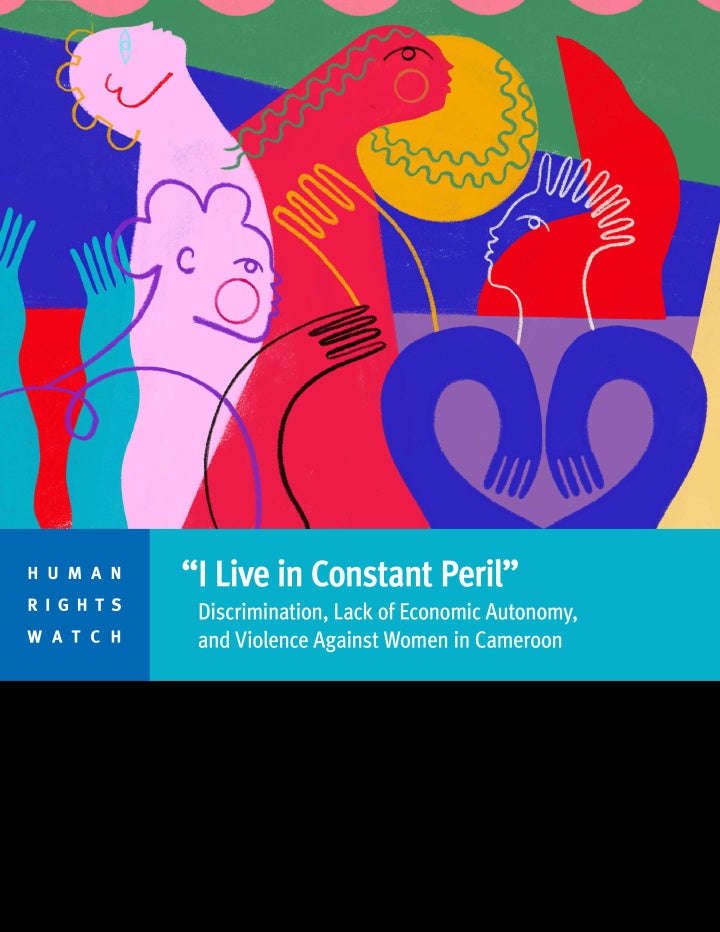
Discrimination, Lack of Economic Autonomy and Violence Against Women in Cameroon
The 75-page report, “‘I Live in Constant Peril:’ Discrimination, Lack of Economic Autonomy and Violence Against Women in Cameroon,” documents widespread violence against women, including physical, psychological, and economic abuse, in most cases by husbands and intimate partners. Researchers found that physical and economic abuse was used to restrict access to financial resources, social security, employment, property, and economic independence. These abuses are not isolated incidents but are rooted in entrenched gender inequality, discriminatory laws, and weak institutions, exacerbated by the government’s chronic underinvestment in prevention and survivor support.
Human Rights Watch began investigating the use of rape and other forms of sexual violence by all sides in the conflict in 1998 and continued to document rape accounts throughout the refugee crisis in 1999.
In the wake of the military takeover in Pakistan, Human Rights Watch released this major report on the state of women's rights in the country. The 100-page report, Crime or Custom?
Acts such as rape, sexual assault, sexual slavery, forced prostitution, forced sterilization, forced abortion, and forced pregnancy may all qualify as crimes under national and international laws.
On August 8, 1998, Taliban militia forces captured the city of Mazar-i Sharif in northwest Afghanistan, the only major city controlled by the United Front, the coalition of forces opposed to the Taliban. The fall of Mazar was part of a successful offensive that gave the Taliban control of almost every major city and important significant territory in northern and central Afghanistan.
Reports that ethnic Chinese women were raped during riots in Jakarta in mid-May have generated an outpouring of rage from around the world and a furious debate inside Indonesia. Legislators in Taiwan and Hong Kong have threatened cut-offs of aid and expulsions of Indonesian migrant workers.
In March 1995, Human Rights Watch released Neither Jobs Nor Justice, a report documenting widespread employment discrimination on the basis of sex that was practiced, condoned, and tolerated by the Russian government.
This report focuses mainly on one aspect of the criminal justice system and its handling of violence against women: the performance of those involved in the provision of medical expertise to the courts when it is alleged that women have been abused. Medical evidence is often a crucial element in the investigation and prosecution of a case of rape or sexual assault.
Sexual Violence during the Rwandan Genocide and its Aftermath
During the 1994 genocide, Rwandan women were subjected to sexual violence on a massive scale, perpetrated by members ofthe infamous Hutu militia groups known as the Interahamwe, by other civilians, and by soldiers of the Rwandan Armed Forces(Forces Armées Rwandaises, FAR), including the Presidential Guard.
This report is a culmination of five years of work gathering evidence of the epidemic levels of violence against women and rampant sex discrimination around the world.
The Widespread Rape of Somali Women Refugees in North Eastern Kenya
While the tragedy in Somalia made daily news, the plight of thousands of refugees in neighboring Kenya remains unpublicized. Since 1992, approximately 300,000 Somalis have fled across the 800 mile Kenya-Somali border, most of them women and children. Many were the victims of violence, including rape, as they fled war-torn Somalia.
Over 70 percent of women in jail in Pakistan report sexual abuse by police officials. Despite the high incidence of rape and sexual torture of female detainees, no police official has been subjected to criminal punishment for these abuses.