Reports

Discrimination, Lack of Economic Autonomy and Violence Against Women in Cameroon

The 75-page report, “‘I Live in Constant Peril:’ Discrimination, Lack of Economic Autonomy and Violence Against Women in Cameroon,” documents widespread violence against women, including physical, psychological, and economic abuse, in most cases by husbands and intimate partners. Researchers found that physical and economic abuse was used to restrict access to financial resources, social security, employment, property, and economic independence. These abuses are not isolated incidents but are rooted in entrenched gender inequality, discriminatory laws, and weak institutions, exacerbated by the government’s chronic underinvestment in prevention and survivor support.

illustration
A man holds a flower and the message "Humanity for All" in front of a line of soldiers

Search

  • October 29, 2020

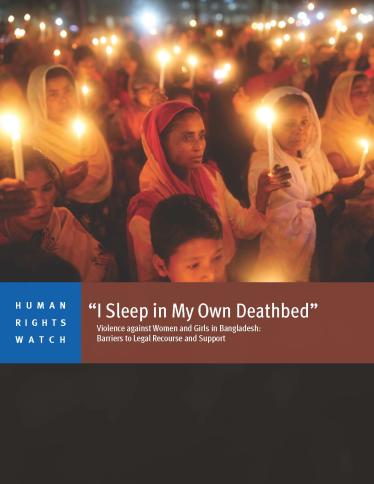
    Violence against Women and Girls in Bangladesh: Barriers to Legal Recourse and Support

    The 65-page report, “‘I Sleep in My Own Deathbed’: Violence against Women and Girls in Bangladesh,” draws on 50 interviews to document the obstacles to realizing the government’s goal of a society without violence against women and children. Human Rights Watch found that despite some important advances, the government response remains deeply inadequate, barriers to reporting assault or seeking legal recourse are frequently insurmountable, and services for survivors are in short supply.

    map content
    video content
    202010asia_bangladesh_cover
  • October 14, 2020

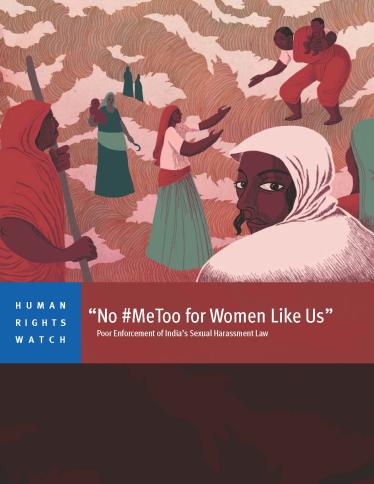
    Poor Enforcement of India’s Sexual Harassment Law

    The 56-page report, No #MeToo for Women Like Us’: Poor Enforcement of India’s Sexual Harassment Law,” finds that while women in India are increasingly speaking out against sexual abuse at work, in part due to the global #MeToo movement, many, particularly in the informal sector, are still constrained by stigma, fear of retribution, and institutional barriers to justice. The central and local governments have failed to promote, establish, and monitor complaints committees – a central feature of the POSH Act – to receive complaints of sexual harassment, conduct inquiries, and recommend actions against abusers.

    video content
    202010asia_india_metoo_cover
  • July 29, 2020

    Sexual Violence Against Men, Boys, and Transgender Women in the Syrian Conflict

    The 77-page report, “‘They Treated Us in Monstrous Ways’: Sexual Violence Against Men, Boys, and Transgender Women in the Syrian Conflict,” found that men and boys have been vulnerable to sexual violence in the Syrian conflict since it began. People Human Rights Watch interviewed said that gay and bisexual men, transgender women, and nonbinary people were subject to increased violence based on their actual or perceived sexual orientation or gender identity. Transgender women are often perceived as gay men in Syria and are targeted for the same reasons.

    202007mena_syria_lgbt_cover
  • February 5, 2020

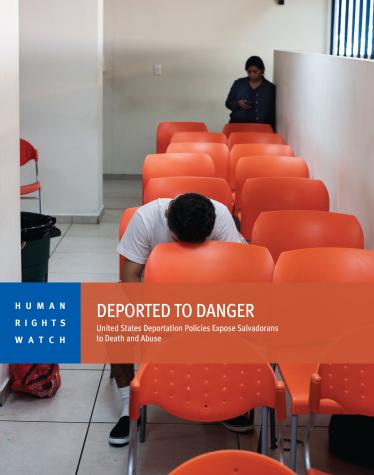
    United States Deportation Policies Expose Salvadorans to Death and Abuse

    The US government has deported people to face abuse and even death in El Salvador. The US is not solely responsible—Salvadoran gangs who prey on deportees and Salvadoran authorities who harm deportees or who do little or nothing to protect them bear direct responsibility—but in many cases the US is putting Salvadorans in harm’s way in circumstances where it knows or should know that harm is likely.

    202002US_Elsalvador_cover
  • November 1, 2018

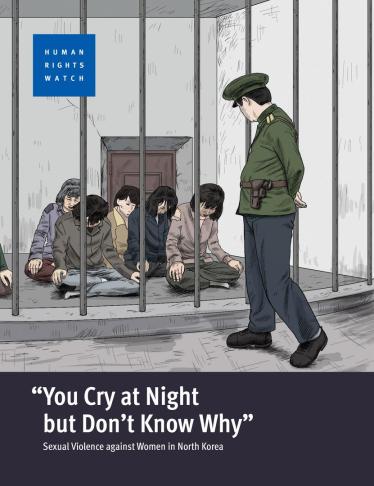
    Sexual Violence against Women in North Korea

    This report documents unwanted sexual contact and violence that is so common in North Korea it has come to be accepted as part of ordinary life. Many North Koreans told Human Rights Watch that when an official in a position of power “picks” a woman she has no choice but to comply with any demands he makes, whether for sex, money, or other favors. Women interviewed said that the sexual predators include high-ranking party officials, prison and detention facility guards and interrogators, police and secret police officials, prosecutors, and soldiers. Fearful of social disgrace and retaliation, and with few, if any, avenues for redress, North Korean women rarely report abuse.

    map content
    video content
    Cover
  • October 18, 2018

    Sexual Exploitation, Harassment and Abuse in Secondary Schools in Senegal

    This report documents abuses against female students in secondary schools, primarily by teachers and school officials. Human Rights Watch found cases of teachers who abuse their authority by engaging in sexual relations with students in exchange for money, good grades, food, or items such as mobile phones and new clothes. 

    map content
    Cover
  • September 5, 2018

    Obstacles to Justice and Remedy for Sexual Assault Survivors in Mauritania

    This report found that when survivors do come forward, police and judicial investigators do not respect their rights and dignity. Human Rights Watch found that investigative procedures do not ensure privacy or confidentiality, rarely offer the possibility to interact with female officials, and can turn into an investigation of the rape survivor’s moral character. Many survivors have limited access, if any, to legal aid, or medical, mental health, and social support.

    map content
    video content
    Cover
  • December 14, 2017

    Sexual Violence against Women and Girls in Kenya’s 2017 Elections

    This report documents the devastating physical, mental, social, and economic impact of gender-based violence and serious human rights abuses surrounding the recent elections. Human Rights Watch found that the government failed to prevent election-related sexual violence, properly investigate cases, hold attackers accountable, and ensure that survivors have access to comprehensive, quality, and timely post-rape care. Many attacks were by security forces, survivors said. 

    video content
    Kenya report cover in English
  • November 16, 2017

    Sexual Violence against Rohingya Women and Girls in Burma

    This report documents the Burmese military’s gang rape of Rohingya women and girls and further acts of violence, cruelty, and humiliation. Many women described witnessing the murders of their young children, spouses, and parents. Rape survivors reported days of agony walking with swollen and torn genitals while fleeing to Bangladesh.


    map content
    video content
    Cover for Burma Report
  • October 5, 2017

    Sexual Violence by Armed Groups in the Central African Republic

    This report documents 305 cases of rape and sexual slavery by members of armed groups between early 2013 and mid-2017. The predominantly Muslim Seleka and the largely Christian and animist militia known as “anti-balaka,” two main parties to the conflict, have used sexual violence as revenge for perceived support of those on the other side of the sectarian divide.

    map content
    video content
    Cover for Central African Republic Report
  • June 21, 2017

    Impunity in Domestic Violence Cases in the Brazilian State of Roraima

    This report examines systemic problems in responding to domestic violence in the state. Human Rights Watch documented 31 cases of domestic violence, and interviewed victims, police, and justice officials. The organization found failures at all points in the system for responding to domestic abuse. 

    map content
    video content
    Cover of the Brazil Report
  • February 14, 2017

    Barriers to Secondary Education in Tanzania

    This report examines obstacles, including some rooted in outmoded government policies, that prevent more than 1.5 million adolescents from attending secondary school and cause many students to drop out because of poor quality education. The problems include a lack of secondary schools in rural areas, an exam that limits access to secondary school, and a discriminatory government policy to expel pregnant or married girls.

    photo gallery
    map content
    Cover for Tanzania Education Report
  • July 16, 2016

    Women and Saudi Arabia’s Male Guardianship System

    This report examines in detail the panoply of formal and informal barriers women in Saudi Arabia face when attempting to make decisions or take action without the presence or consent of a male relative. As one 25-year-old Saudi woman told Human Rights Watch, “We all have to live in the borders of the boxes our dads or husbands draw for us.” In some cases, men use the permission requirements to extort large sums of money from female dependents.

    photo gallery
    video content
    Cover for Saudi Arabia Report
  • May 19, 2016

    Lack of Recourse for Wrongfully Discharged US Military Rape Survivors

    This report found that many rape victims suffering from trauma were unfairly discharged for a “personality disorder” or other mental health condition that makes them ineligible for benefits. Others were given “Other Than Honorable” discharges for misconduct related to the assault that shut them out of the Department of Veterans Affairs healthcare system and a broad range of educational and financial assistance. The consequences of having “bad paper” – any discharge other than “honorable” – or being labeled as having a “personality disorder” are far-reaching for veterans and their families, impacting employment, child custody, health care, disability payments, burial rights – virtually all aspects of life.


    photo gallery
    video content
    cover image
  • March 23, 2016

    Abuse against Transgender Women in US Immigration Detention

    This report documents 28 cases of transgender women who were held in US immigration detention between 2011 and 2015. More than half of the transgender women Human Rights Watch interviewed were held in men’s facilities at some point. Half also spent time in solitary confinement, in many cases allegedly for their protection. But solitary confinement is a form of abuse in and of itself, and many who had spent time there experienced trauma and profound psychological distress.


    video content
    report cover